
Introduction to Ecommerce Website Development
The ecommerce industry continues to grow rapidly, transforming how consumers shop and how businesses generate revenue. In 2026, having an ecommerce website is no longer optional for many business, it is a critical sales channel that can operate 24/7, reach customers globally, and generate scalable growth.
However, building an ecommerce website involves much more than simply adding products to a website. Success requires careful planning, platform selection, user experience design, security implementation, SEO optimization, payment integration, and conversion-focused development.
Whether you’re launching your first online store, expanding an existing business online, or considering a complete ecommerce redesign, this guide covers everything you need to know about ecommerce website development in 2026.
What Is Ecommerce Website Development?
Ecommerce website development is the process of designing, building, and maintaining an online store where customers can browse products, place orders, and make payments digitally.
A complete ecommerce website includes:
- Product catalog
- Shopping cart
- Secure checkout
- Payment processing
- Inventory management
- Customer accounts
- Order tracking
- Mobile optimization
- SEO implementation
The goal is to create a seamless shopping experience that converts visitors into paying customers.
Why Businesses Need Ecommerce Websites in 2026
Consumer behavior continues shifting toward online purchasing.
Businesses with ecommerce capabilities benefit from:
24/7 Sales Opportunities
Unlike physical stores, ecommerce websites never close.
Wider Market Reach
Sell locally, nationally, or internationally.
Lower Operational Costs
Often more cost-effective than expanding physical locations.
Better Customer Data
Track behavior, purchases, and preferences.
Scalability
Growth becomes easier through digital channels.
Related Reading:
Internal Link: Why a Website Is Better Than Social Media Alone for Businesses (2026)
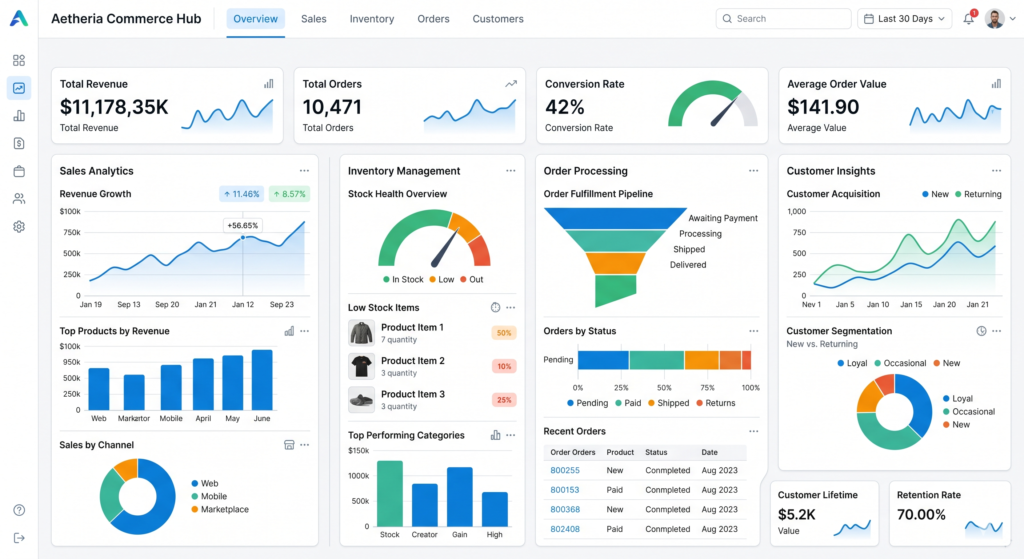
Types of Ecommerce Websites
Different business models require different ecommerce solutions.
B2C (Business-to-Consumer)
Examples:
- Fashion stores
- Electronics retailers
- Beauty brands
Most common ecommerce model.
B2B (Business-to-Business)
Examples:
- Wholesale suppliers
- Manufacturers
- Industrial equipment sellers
Requires advanced pricing and account systems.
D2C (Direct-to-Consumer)
Brands sell directly to customers without intermediaries.
Examples:
- Shopify brands
- Subscription businesses
Marketplace
Multiple vendors sell products through one platform.
Examples:
- Amazon
- Etsy
Key Features Every Ecommerce Website Needs
A successful ecommerce website requires more than attractive design.
Product Management System
Must support:
- Product variations
- Categories
- Inventory tracking
- Product images
Shopping Cart
Customers should easily:
- Add products
- Edit quantities
- Save items
- Continue shopping
Secure Checkout
A frictionless checkout process improves conversions.
Search Functionality
Fast product search improves user experience.
Customer Accounts
Allow users to:
- Track orders
- Save information
- Manage purchases
Related Reading:
Internal Link: E-commerce Website Development: Key Features That Convert
Choosing the Right Ecommerce Platform
Platform selection significantly impacts performance, scalability, and costs.
Ecommerce Platform Comparison
| Platform | Best For | Difficulty |
|---|---|---|
| Shopify | Small to medium businesses | Easy |
| WooCommerce | WordPress websites | Moderate |
| Magento | Large stores | Advanced |
| Wix Ecommerce | Small businesses | Easy |
| Custom Development | Unique requirements | Advanced |
Shopify
Advantages:
- Fast setup
- Reliable hosting
- Built-in ecommerce tools
WooCommerce
Advantages:
- Flexibility
- SEO control
- Large plugin ecosystem
Custom Ecommerce
Advantages:
- Unlimited customization
- Full ownership
- Advanced scalability
Related Reading:
Internal Link: CMS Comparison: WordPress, Shopify, Wix, and Custom Solutions
Ecommerce Website Development Process
Step 1: Define Business Goals
Questions include:
- What products will you sell?
- What markets will you target?
- What revenue goals exist?
Step 2: Research Competitors
Analyze:
- Website structure
- Product pages
- Checkout process
- Customer experience
Step 3: Select Platform
Choose based on:
- Budget
- Product volume
- Growth plans
Step 4: Design User Experience
Focus on:
- Navigation
- Product discovery
- Checkout simplicity
Step 5: Develop Website
Implement:
- Product management
- Payment systems
- Security features
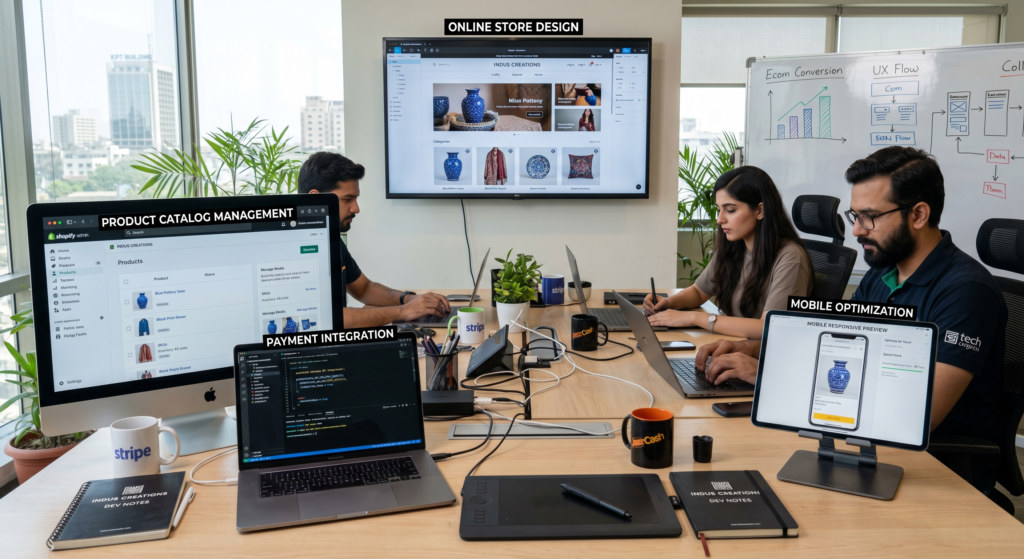
Step 6: Testing
Verify:
- Mobile functionality
- Checkout process
- Site speed
- Security
Step 7: Launch and Optimize
Monitor:
- Sales
- Traffic
- Conversions
Related Reading:
Internal Link: Website Development Timeline: How Long Does It Take to Build a Business Website?
Ecommerce Website Design Best Practices
Design directly affects sales performance.
Prioritize Product Visibility
Products should remain the primary focus.
Simplify Navigation
Customers should find products quickly.
Related Reading:
Internal Link: How to Optimize Website Navigation for Better User Experience
Use High-Quality Product Images
Professional visuals increase trust.
Display Trust Signals
Examples:
- SSL certificates
- Reviews
- Payment badges
- Return policies
Optimize Product Pages
Include:
- Detailed descriptions
- Images
- Reviews
- Specifications
Ecommerce SEO Essentials
SEO helps online stores attract free traffic from search engines.
Keyword Optimization
Target:
- Product keywords
- Category keywords
- Informational keywords
Product Page SEO
Optimize:
- Titles
- Meta descriptions
- URLs
- Images
Technical SEO
Ensure:
- Fast loading
- Mobile friendliness
- Proper indexing
Related Reading:
Internal Links:
- SEO-Friendly Website Design: Best Practices for Higher Rankings
- On-Page SEO Checklist for Business Websites (2026)
Payment Gateway Integration
Customers expect secure and convenient payment options.
Common gateways include:
- Stripe
- PayPal
- Authorize.Net
- 2Checkout
- Local payment gateways
Payment Features
- Multiple payment methods
- Fraud protection
- Fast checkout
- Secure encryption
Ecommerce Security Requirements
Security directly impacts customer trust.
SSL Certificates
Protect customer information.
PCI Compliance
Required for secure payment processing.
Malware Protection
Protect against cyber threats.
Regular Backups
Prevent data loss.
Related Reading:
Internal Link: Website Security Essentials for Businesses in 2026

Mobile Commerce Optimization
Mobile shopping continues to dominate ecommerce traffic.
Mobile-First Design
Your website should be designed primarily for smartphones.
Fast Mobile Performance
Mobile users abandon slow websites quickly.
Simplified Checkout
Reduce friction on smaller screens.
Related Reading:
Internal Link: Mobile-First Website Design: Why It’s Critical in 2026
Conversion Rate Optimization (CRO) for Ecommerce
Driving traffic is only part of the challenge.
Your website must convert visitors into buyers.
Improve Product Pages
Include:
- Reviews
- FAQs
- Social proof
Reduce Checkout Steps
Shorter checkout processes increase conversions.
Use Strategic CTAs
Examples:
- Buy Now
- Add to Cart
- Get Free Shipping
Related Reading:
Internal Link: Website Conversion Rate Optimization (CRO): How to Turn Visitors into Customers (2026)
Ecommerce Website Costs Explained
Costs vary depending on complexity.
| Website Type | Estimated Cost |
|---|---|
| Basic Ecommerce Website | $500 – $2,500 |
| Professional Ecommerce Store | $2,500 – $10,000 |
| Advanced Ecommerce Platform | $10,000 – $50,000+ |
| Enterprise Ecommerce Solution | $50,000+ |
Factors affecting cost:
- Number of products
- Platform selection
- Custom functionality
- Integrations
- Design requirements
Related Reading:
Internal Links:
- Website Development Cost in Pakistan & UAE (2026 Guide)
- Business Website Cost Explained: What You’re Really Paying For
Common Ecommerce Website Mistakes
Slow Loading Speed
Kills conversions and SEO performance.
Complicated Checkout
Creates cart abandonment.
Poor Product Photography
Reduces trust.
Weak Mobile Experience
Mobile users make up the majority of shoppers.
Missing SEO Optimization
Limits organic growth.
Lack of Trust Signals
Customers hesitate to purchase.
Related Reading:
Internal Link: Common Website Design Mistakes That Hurt SEO in 2026

Ecommerce Website Development Checklist
Planning
- Define business goals
- Research competitors
- Choose platform
Development
- Configure products
- Implement payment gateway
- Set up shipping
Design
- Mobile optimization
- Navigation improvements
- Product page design
SEO
- Optimize product pages
- Create clean URLs
- Improve speed
Security
- Install SSL
- Enable backups
- Implement malware protection
Launch
- Test checkout
- Verify analytics
- Monitor performance
Practical Example
A local clothing retailer launches an ecommerce website.
Before
- Only physical store sales
- Limited customer reach
- Manual inventory management
After Ecommerce Launch
- Nationwide sales
- Online inventory tracking
- Automated order processing
- Increased revenue streams
Within six months, online sales account for 40% of total revenue.
10 Actionable Ecommerce Development Tips
1. Choose a scalable platform.
2. Design for mobile users first.
3. Invest in professional product photography.
4. Simplify checkout processes.
5. Prioritize website speed.
6. Implement strong security measures.
7. Optimize product pages for SEO.
8. Use customer reviews strategically.
9. Monitor analytics regularly.
10. Continuously test and improve conversions.
Conclusion
Ecommerce website development is one of the most valuable investments businesses can make in 2026. A professionally developed online store provides scalability, accessibility, and revenue opportunities that traditional sales channels often cannot match.
Success requires more than attractive design, it demands strategic planning, mobile optimization, SEO implementation, security, and continuous conversion optimization. Businesses that invest in these fundamentals position themselves for long-term ecommerce growth and competitive advantage.
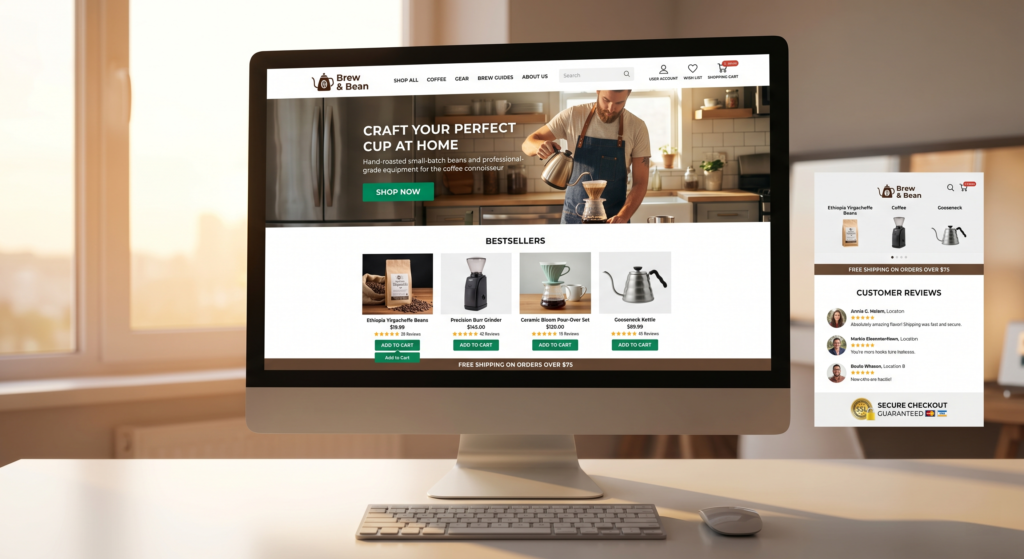
Call-To-Action
Ready to launch or upgrade your ecommerce website?
Omocracy helps businesses create high-performing ecommerce stores that combine modern design, SEO, security, and conversion-focused development to maximize online sales.
Contact Omocracy today and start building an ecommerce website designed for growth.
External Resources
- https://www.shopify.com
- https://woocommerce.com
- https://developers.google.com/search
- https://www.wordstream.com
FAQs
What is ecommerce website development?
It is the process of creating an online store that enables digital sales.
Which platform is best for ecommerce?
Shopify and WooCommerce are popular options, depending on business needs.
How much does an ecommerce website cost?
Costs range from hundreds to thousands of dollars based on complexity.
Why is mobile optimization important?
Most ecommerce traffic now comes from mobile devices.
What security measures are necessary?
SSL certificates, PCI compliance, backups, and malware protection.
How can ecommerce websites improve SEO?
By optimizing product pages, site structure, and technical performance.
What causes cart abandonment?
Complicated checkout processes, hidden costs, and poor user experience.
How long does ecommerce development take?
Typically 4–16 weeks depending on project complexity.
Can small businesses benefit from ecommerce?
Absolutely. Ecommerce expands market reach and revenue opportunities.
What is the most important ecommerce feature?
A secure and user-friendly checkout experience.