
How to Improve Website Conversion Rate
Getting visitors to your website is only half the battle. The real challenge is turning those visitors into paying customers, qualified leads, or subscribers. Many businesses invest heavily in SEO, paid advertising, and social media marketing but fail to achieve meaningful results because their website isn’t optimized for conversions.
This is where Conversion Rate Optimization (CRO) becomes essential. CRO is the process of improving your website so that more visitors take desired actions, whether that’s filling out a contact form, requesting a quote, subscribing to a newsletter, or completing a purchase.
A high-converting website doesn’t happen by chance. It combines user-friendly design, compelling content, fast performance, trust signals, and continuous testing to create an experience that encourages visitors to act. If you’re still in the planning stage of building your website, our guide on How to Plan a Business Website: Complete Strategy Before You Start Development (2026) explains how strategic planning lays the foundation for better conversions.
In this comprehensive guide, you’ll learn practical strategies to improve your website conversion rate, common mistakes to avoid, and the best practices that help businesses generate more leads and sales in 2026.
What Is Website Conversion Rate?
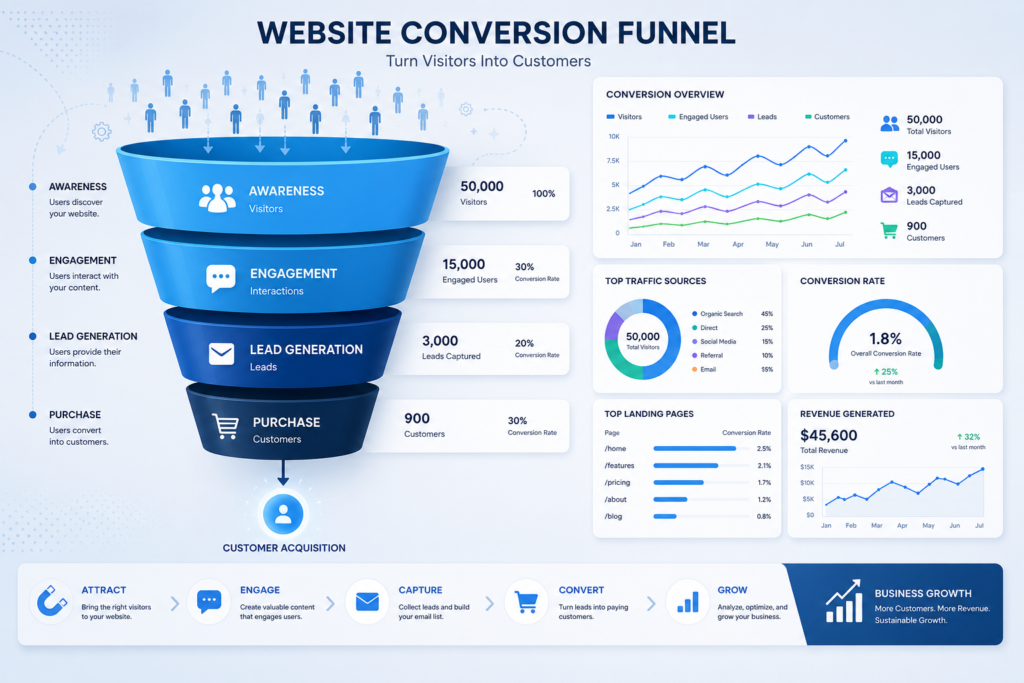
Website conversion rate is the percentage of visitors who complete a desired action on your website.
A conversion could include:
- Purchasing a product
- Filling out a contact form
- Requesting a quote
- Booking an appointment
- Downloading a resource
- Signing up for a newsletter
- Calling your business
- Creating an account
For example, if 5,000 people visit your website in a month and 250 complete a purchase or submit an inquiry, your conversion rate is 5%.
Improving this percentage means generating more business without necessarily increasing website traffic.
Why Conversion Rate Optimization Matters
Many businesses focus exclusively on attracting more visitors. While traffic is important, increasing conversions often provides a better return on investment.
Imagine two websites that each receive 10,000 monthly visitors.
- Website A converts 1% of visitors.
- Website B converts 4% of visitors.
Website B generates four times more leads or sales from the same amount of traffic. This is why CRO is one of the most cost-effective digital marketing strategies.
If your website receives steady traffic but generates few inquiries, it may suffer from design or usability issues. Our article Why Most Business Websites Don’t Convert (And How to Fix It) explores the most common reasons businesses lose potential customers.
Understand Your Audience First
Effective CRO begins with understanding your target audience.
Ask yourself:
- Who visits your website?
- What problems are they trying to solve?
- What information do they need before making a decision?
- What objections might stop them from converting?
Use customer surveys, website analytics, and feedback forms to identify visitor behavior and pain points. Tailoring your website to meet these needs creates a more persuasive user experience.
Improve Website Speed
Website speed directly affects conversion rates. Visitors expect pages to load quickly, and even a slight delay can increase bounce rates.
To improve loading times:
- Compress images without reducing quality.
- Enable browser caching.
- Minify CSS and JavaScript files.
- Use a Content Delivery Network (CDN).
- Choose reliable web hosting.
- Remove unnecessary plugins and scripts.
Google also considers page speed a ranking factor, making it beneficial for both SEO and conversions. Learn more in our guide How Website Speed Impacts SEO & Conversions, where we explain practical ways to improve performance.
Create Clear and Compelling Calls-to-Action (CTAs)
Every page should guide visitors toward a specific action.
Effective CTAs are:
- Easy to find
- Action-oriented
- Visually distinct
- Benefit-focused
Instead of generic buttons like “Submit” or “Click Here,” use persuasive phrases such as:
- Get a Free Quote
- Book Your Free Consultation
- Start Your Project Today
- Download the Free Guide
- Request a Demo
Place CTAs strategically throughout your website without overwhelming visitors.
Build Trust with Social Proof
People are more likely to take action when they see evidence that others have had positive experiences with your business.
Trust signals include:
- Customer testimonials
- Verified reviews
- Case studies
- Client logos
- Industry certifications
- Awards
- Years of experience
- Success statistics
Displaying these elements near forms and CTAs can significantly improve conversion rates.
Optimize Your Landing Pages
Landing pages should focus on one objective.
An effective landing page includes:
- A compelling headline
- Clear value proposition
- Relevant visuals
- Concise content
- Strong CTA
- Trust indicators
- Mobile responsiveness
- Minimal distractions
Avoid unnecessary navigation options that may encourage visitors to leave before converting.
For additional strategies, read our article Landing Page Design Best Practices for Lead Generation, which covers essential design techniques for maximizing conversions.

Make Your Website Mobile-Friendly
More than half of global web traffic now comes from mobile devices. A website that performs poorly on smartphones will lose valuable customers.
Ensure your website:
- Uses responsive design
- Features readable text
- Has touch-friendly buttons
- Loads quickly on mobile networks
- Displays forms correctly
- Simplifies navigation
If you’re redesigning your site, our guide Mobile-First Website Design: Why It’s Critical in 2026 explains why designing for mobile users first is now essential.
Simplify Navigation
Visitors should find information within a few clicks.
Good navigation includes:
- Logical menu structure
- Descriptive labels
- Search functionality
- Breadcrumb navigation
- Consistent page layouts
Complicated navigation frustrates users and increases bounce rates. Our guide How to Optimize Website Navigation for Better User Experience provides practical techniques for creating intuitive navigation structures.
Use High-Quality Visuals
Professional images, videos, and graphics improve credibility and help explain your products or services.
Avoid:
- Low-resolution images
- Generic stock photos
- Cluttered layouts
- Auto-playing videos with sound
Instead, use authentic visuals that reflect your brand and support your messaging.
Improve Contact Forms
Long forms discourage conversions.
Best practices include:
- Ask only for essential information.
- Use clear field labels.
- Display helpful error messages.
- Enable autofill where possible.
- Include privacy assurances.
- Keep forms mobile-friendly.
A shorter, user-friendly form can dramatically increase lead generation.
Conduct A/B Testing
Never assume your first design is the best.
A/B testing compares two versions of a webpage to determine which performs better.
You can test:
- Headlines
- CTA buttons
- Images
- Colors
- Page layouts
- Form lengths
- Product descriptions
Small improvements can lead to significant increases in conversions over time.
Monitor Analytics Regularly
Data should guide every CRO decision.
Track metrics such as:
- Conversion rate
- Bounce rate
- Session duration
- Exit pages
- Click-through rate
- Goal completions
- Heatmaps
- User recordings
Understanding visitor behavior helps identify opportunities for optimization.
To learn how data supports business growth, explore our guide How Website Analytics Can Improve Your Business ROI, where we explain the key metrics every business should monitor.
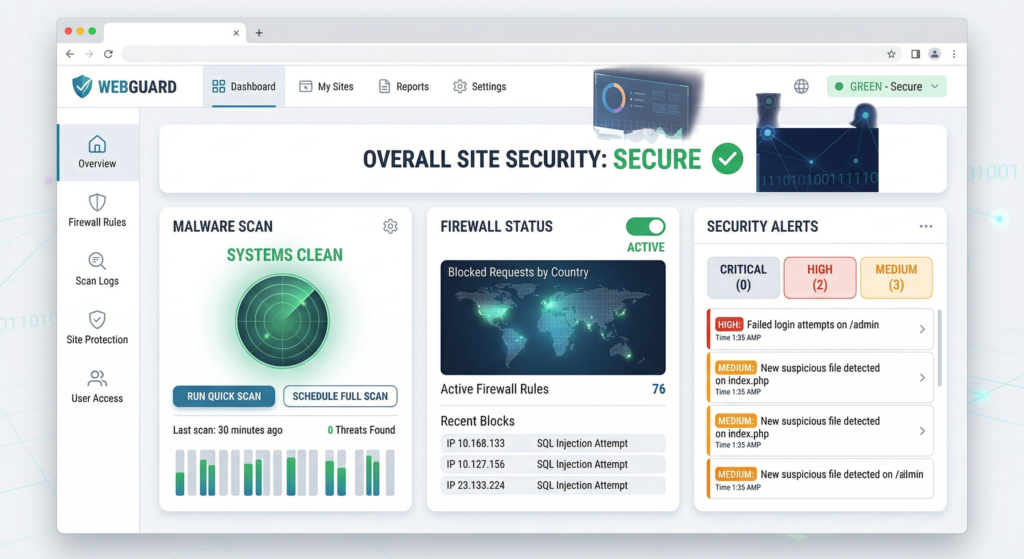
Keep Your Website Secure
Visitors won’t trust an insecure website.
Essential security measures include:
- SSL certificates
- Regular software updates
- Malware protection
- Secure payment gateways
- Strong authentication
- Routine backups
A secure website not only protects customer data but also strengthens your brand’s credibility. For a complete overview, read Website Security Essentials for Businesses in 2026 to understand the latest security best practices.
External Resources
- Google Search Central: https://developers.google.com/search
- HubSpot Marketing Blog: https://blog.hubspot.com/
- Ahrefs Blog: https://ahrefs.com/blog/
- Moz Learning Center: https://moz.com/learn/seo
Conclusion
Improving your website conversion rate isn’t about making one major change it’s about continuously refining every aspect of the user experience. From faster loading speeds and mobile-friendly design to persuasive calls-to-action, simplified navigation, trust-building elements, and ongoing A/B testing, each improvement contributes to higher conversions and better business results.
Remember that CRO is an ongoing process, not a one-time project. Regularly reviewing analytics, testing new ideas, updating content, and addressing user feedback will help your website adapt to changing customer expectations and market trends. By combining these best practices with a strong SEO strategy and a user-focused design, your business can generate more leads, increase sales, and maximize the return on every visitor.
FAQs
What is website conversion rate optimization (CRO)?
Conversion Rate Optimization (CRO) is the process of improving a website to increase the percentage of visitors who complete a desired action, such as making a purchase, submitting a form, or requesting a quote.
Why is CRO important for businesses?
CRO helps businesses generate more leads and sales without increasing website traffic, making marketing efforts more cost-effective and improving overall return on investment.
What is considered a good website conversion rate?
A good conversion rate varies by industry, but many businesses aim for a rate between 2% and 5%. High-performing websites may achieve even higher conversion rates through continuous optimization.
How can I improve my website conversion rate?
You can improve conversions by optimizing page speed, simplifying navigation, using compelling calls-to-action, building trust with testimonials, improving landing pages, and conducting A/B testing.
Does website speed affect conversions?
Yes. Faster websites provide a better user experience, reduce bounce rates, and encourage visitors to complete desired actions, leading to higher conversion rates.
Why are landing pages important for CRO?
Landing pages focus visitors on a single objective, reducing distractions and increasing the likelihood of conversions through targeted messaging and clear calls-to-action.
What tools can help measure conversion rates?
Popular tools include Google Analytics 4, Google Search Console, Microsoft Clarity, Hotjar, and various A/B testing platforms that provide insights into user behavior and conversion performance.
How often should I perform CRO testing?
Conversion optimization should be an ongoing process. Regular testing and analysis help identify new opportunities to improve user experience and increase conversions.
Can mobile optimization improve conversion rates?
Absolutely. Since many users browse on mobile devices, a responsive, fast, and easy-to-use mobile website significantly improves engagement and conversions.
Is CRO only for eCommerce websites?
No. CRO benefits all types of websites, including service businesses, B2B companies, healthcare providers, educational institutions, and nonprofits by increasing leads, inquiries, and user engagement.