
Ranking on search engines like Google is no longer just about keywords it’s about delivering a complete, optimized user experience. On-page SEO ensures your website is structured, fast, and relevant for both users and search engines.
If your website is not properly optimized, even the best design and content may fail to rank.
In this guide, we’ll walk through a complete on-page SEO checklist for business websites in 2026 to help you improve rankings, traffic, and conversions.
What Is On-Page SEO?
On-page SEO refers to all the optimizations made directly on your website to improve search engine rankings.
This includes:
- Content optimization
- HTML structure
- Meta tags
- Page speed
- Internal linking
- User experience
For a full website strategy, explore:
Complete Website Development Guide for Businesses (2026): Design, Development, SEO & Cost
Keyword Optimization (Without Overstuffing)
Keywords are still important, but stuffing them unnaturally can hurt rankings.
Best practices:
- Use your main keyword in the title, headings, and content
- Include related keywords naturally
- Focus on search intent, not just keywords
Learn more:
SEO-Friendly Website Design: Best Practices for Higher Rankings

Optimize Title Tags and Meta Descriptions
Your title and meta description are the first things users see in search results.
Tips:
- Keep title under 60 characters
- Include primary keyword
- Write compelling meta descriptions (under 160 characters)
These directly impact click-through rates (CTR).
Use Proper Heading Structure (H1, H2, H3)
Headings help both users and search engines understand your content.
Best practices:
- Use one H1 per page
- Use H2 and H3 for structure
- Include keywords naturally in headings
Well-structured content improves readability and SEO.
Improve Website Speed
Page speed is a major ranking factor.
Slow websites lead to:
- Higher bounce rates
- Lower rankings
- Poor user experience
Improve performance:
How Website Speed Impacts SEO & Conversions
You can also test your site here:
https://pagespeed.web.dev/
Mobile-First Optimization
Search engines prioritize mobile-friendly websites.
Ensure your website:
- Is responsive on all devices
- Loads quickly on mobile
- Has easy navigation
Learn more:
Mobile-First Website Design: Why It’s Critical in 2026
Optimize URL Structure
Clean and simple URLs help both users and search engines.
Good URL example:yourwebsite.com/website-seo-checklist
Avoid:
- Long, complex URLs
- Unnecessary parameters
- Random numbers or symbols
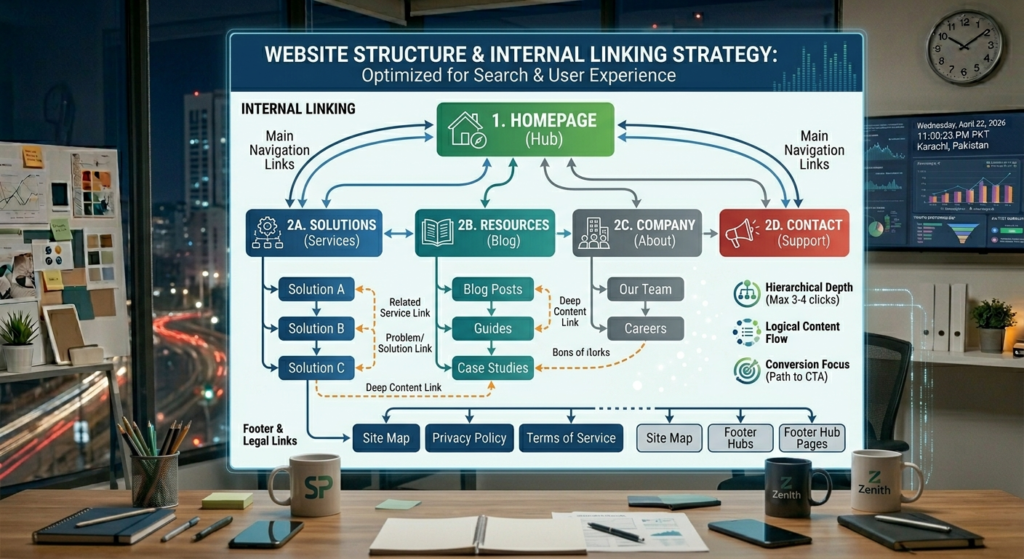
Internal Linking Strategy
Internal links help search engines crawl your website and improve SEO.
You should link to relevant pages like:
- Website Development for Lead Generation: Best Practices
- Why Most Business Websites Don’t Convert (And How to Fix It)
- How to Optimize Website Navigation for Better User Experience
Best practices:
- Use descriptive anchor text
- Link to relevant content
- Avoid over-linking
Optimize Images for SEO
Images improve user experience but must be optimized.
Checklist:
- Use compressed images
- Add alt text with keywords
- Use proper file names
Example:
website-seo-checklist-2026.jpg
Improve Content Quality
Content is still the most important ranking factor.
Your content should be:
- Helpful and informative
- Easy to read
- Well-structured
- Updated regularly
Avoid mistakes:
Common Website Design Mistakes That Hurt SEO in 2026
Focus on User Experience (UX)
Search engines prioritize websites that provide a good user experience.
Key UX factors:
- Easy navigation
- Fast loading speed
- Mobile responsiveness
- Clear layout
Improve UX:
First Impression Matters: Website Design for Businesses (2026)
Add Schema Markup (Structured Data)
Schema markup helps search engines understand your content better.
It can improve:
- Rich snippets
- Visibility in search results
- Click-through rates
You can learn more here:
https://developers.google.com/search/docs/appearance/structured-data/intro-structured-data
Secure Your Website (HTTPS)
Security is a ranking factor.
Make sure your website:
- Uses HTTPS
- Has SSL certificates
- Protects user data
Learn more:
Website Security Essentials for Businesses in 2026
Optimize for Conversions
SEO should not only bring traffic it should generate results.
To improve conversions:
- Use clear CTAs
- Optimize landing pages
- Reduce friction
Related guide:
Landing Page Design Tips That Increase Leads
Conclusion
On-page SEO is essential for improving search rankings, driving traffic, and increasing conversions. Businesses that follow a structured SEO checklist can build strong online visibility and outperform competitors.
In 2026, successful websites are those that combine technical SEO, high-quality content, and excellent user experience.
Explore your service page:
Website Development Services for Businesses
FAQs
What is on-page SEO?
On-page SEO refers to optimizing elements on your website such as content, structure, and performance to improve rankings.
Why is on-page SEO important?
It helps search engines understand your content and improves visibility in search results.
How often should I update on-page SEO?
You should review and update your SEO regularly, especially when algorithms change or content becomes outdated.
Does on-page SEO improve conversions?
Yes. Proper SEO improves user experience, which leads to better engagement and higher conversions.