
Getting traffic to your website is only half the battle. The real success lies in turning those visitors into paying customers. This is where Conversion Rate Optimization (CRO) becomes essential.
CRO focuses on improving your website so that more visitors take action — whether it’s making a purchase, filling out a form, or contacting your business.
In this guide, we’ll explore how CRO works, why it matters, and proven strategies to increase your website conversions in 2026.
What Is Conversion Rate Optimization (CRO)?
Conversion Rate Optimization (CRO) is the process of improving your website to increase the percentage of visitors who complete a desired action.
This could include:
- Buying a product
- Submitting a contact form
- Signing up for a newsletter
- Booking a service
For example, if 100 people visit your website and 5 take action, your conversion rate is 5%.
Improving this percentage can significantly boost revenue without increasing traffic.
To understand why some websites fail to convert, read:
Why Most Business Websites Don’t Convert (And How to Fix It)
Why CRO Is Important for Business Growth
CRO directly impacts your revenue and return on investment.
Benefits include:
- Higher sales without increasing traffic
- Better user experience
- Lower marketing costs
- Increased ROI
Companies like Amazon and Shopify continuously optimize their websites to improve conversions and maximize profits.
Understand Your Audience First
Before optimizing your website, you need to understand your users.
Use tools like Google Analytics to analyze:
- User behavior
- Traffic sources
- Bounce rates
- Conversion paths
Learn more in:
How Website Analytics Can Improve Your Business ROI
You can also explore behavior insights here:
https://www.hotjar.com/blog/conversion-rate-optimization/

Improve Website Speed
Website speed is one of the biggest factors affecting conversions.
Slow websites lead to:
- High bounce rates
- Poor user experience
- Lost sales
Even a 1-second delay can reduce conversions significantly.
Improve performance using:
How Website Speed Impacts SEO & Conversions
Optimize Your Landing Pages
Landing pages are critical for conversions.
High-converting landing pages include:
- Clear headlines
- Strong value proposition
- Simple design
- Strong call-to-action (CTA)
Improve your pages here:
Landing Page Design Tips That Increase Leads
Use Clear and Strong Call-to-Actions (CTAs)
Your CTA tells users what to do next.
Effective CTAs should be:
- Clear and direct
- Visually prominent
- Action-oriented (e.g., “Get Started”, “Buy Now”)
Weak CTAs lead to missed opportunities.
Improve Website Navigation
If users can’t find what they’re looking for, they will leave.
Good navigation should be:
- Simple and intuitive
- Mobile-friendly
- Well-structured
Learn more:
How to Optimize Website Navigation for Better User Experience
Build Trust and Credibility
Visitors are more likely to convert if they trust your website.
Ways to build trust:
- Professional design
- Customer testimonials
- Secure payment options
- Clear contact information
Also read:
Website Security Essentials for Businesses in 2026
Mobile Optimization Is Critical
Most users now browse on mobile devices.
A non-mobile-friendly website leads to:
- Poor user experience
- Lower conversions
Improve mobile UX here:
Mobile-First Website Design: Why It’s Critical in 2026
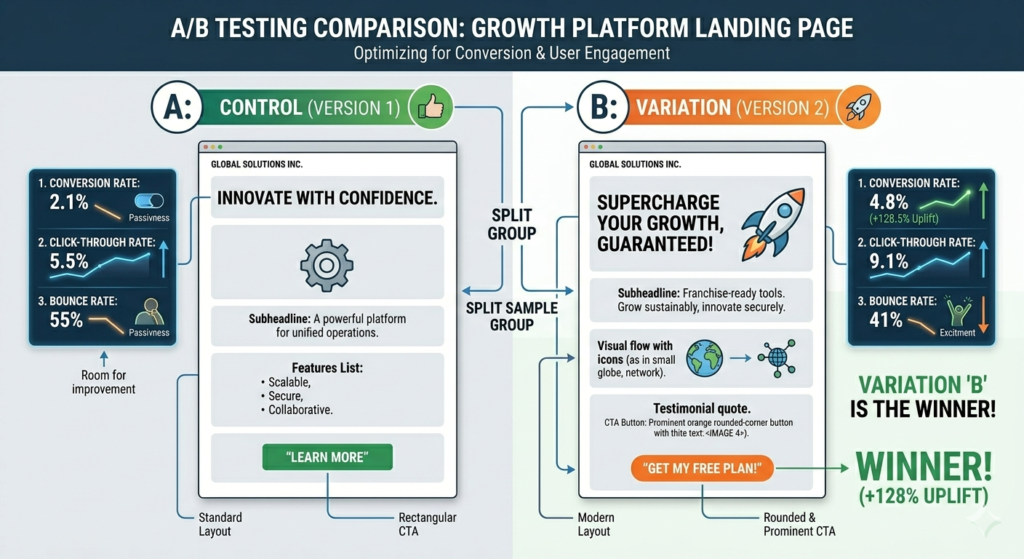
Use A/B Testing to Improve Results
A/B testing allows you to test different versions of your website.
You can test:
- Headlines
- Images
- CTA buttons
- Layouts
This helps identify what works best based on real data.
Reduce Friction in the User Journey
Friction refers to anything that slows users down or confuses them.
Examples:
- Long forms
- Complicated checkout process
- Slow loading pages
Removing friction improves conversions significantly.
Related:
E-commerce Website Development: Key Features That Convert
Focus on Lead Generation Strategy
CRO is closely linked with lead generation.
You can improve leads by:
- Offering free resources
- Using contact forms
- Adding live chat
- Creating compelling offers
Learn more:
Website Development for Lead Generation: Best Practices
Use the Right Platform for Better CRO
Your website platform can affect performance and flexibility.
Some businesses use WordPress for flexibility, while others prefer Shopify for e-commerce.
Compare platforms here:
CMS Comparison: WordPress, Shopify, Wix, and Custom Solutions
External Resources
- CRO Guide: https://www.optimizely.com/optimization-glossary/conversion-rate-optimization/
- UX & Conversion Research: https://www.nngroup.com/articles/
- Google Analytics Learning: https://analytics.google.com/analytics/academy/
Conclusion
Conversion Rate Optimization (CRO) is one of the most effective ways to grow your business online. Instead of focusing only on increasing traffic, CRO helps you get more value from the visitors you already have.
By improving user experience, optimizing design, and using data-driven strategies, businesses can turn more visitors into customers and significantly increase revenue.
In 2026, businesses that focus on CRO will have a major competitive advantage.
Explore your service page:
Website Development Services for Businesses
FAQs
What is CRO in website development?
CRO (Conversion Rate Optimization) is the process of improving a website to increase the percentage of visitors who take action.
Why is CRO important for businesses?
CRO helps increase sales and leads without increasing traffic, making marketing more cost-effective.
What is a good conversion rate?
A good conversion rate varies by industry, but typically ranges between 2%–5%.
How can I improve my website conversion rate?
You can improve conversions by optimizing landing pages, improving speed, using strong CTAs, and analyzing user behavior.