
In today’s digital world, users expect websites to load instantly. If your website takes too long to load, visitors may leave before even seeing your content. Website speed is no longer just a technical factor, it directly impacts SEO rankings, user experience, and conversions.
Search engines like Google prioritize fast websites because they provide a better experience for users. A slow website can reduce your visibility in search results and cost your business valuable leads.
In this guide, we’ll explore how website speed impacts SEO and conversions and how businesses can improve their website performance.
Why Website Speed Matters for Businesses
When someone visits your website, they expect the page to load within a few seconds. Studies show that users start abandoning websites if they take more than 3 seconds to load.
A fast website helps businesses:
- Improve search engine rankings
- Increase user engagement
- Reduce bounce rate
- Generate more leads and sales
If your website is slow, it may also damage your brand’s credibility. Visitors often associate slow websites with unprofessional businesses.
If you’re building a new website, it’s important to follow the right development practices. Our guide on Why a Website Is Better Than Social Media Alone for Businesses (2026) explains why having a professionally developed website is critical for long-term growth.
How Website Speed Affects SEO
Google considers page speed a ranking factor. Faster websites have a higher chance of appearing in top search results.
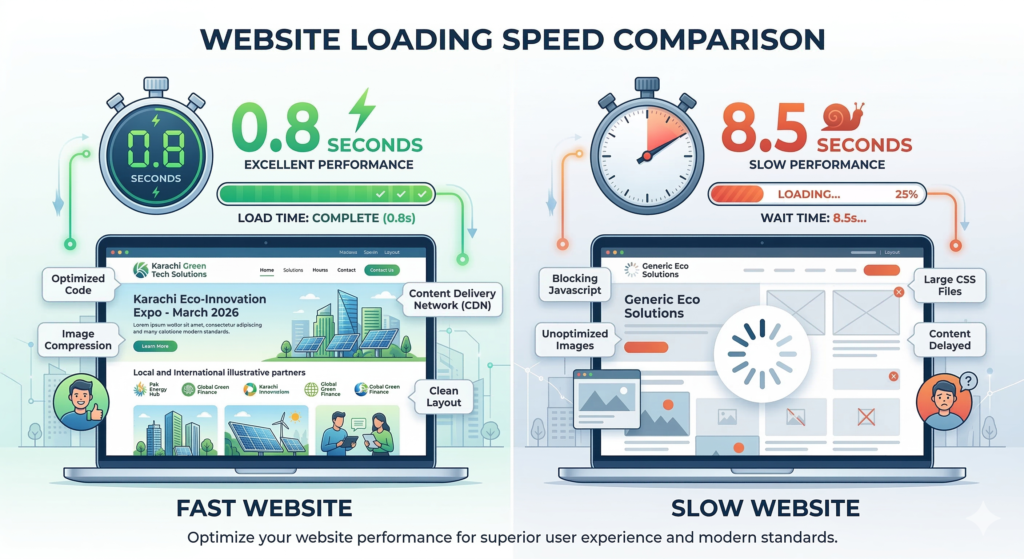
Google measures website performance through Core Web Vitals, which evaluate loading speed, responsiveness, and visual stability.
You can test your website performance using
https://pagespeed.web.dev/
According to Google’s official documentation, faster websites provide better user experience and improved search visibility.
https://developers.google.com/search/docs/appearance/page-experience
Slow websites often suffer from:
- Lower search rankings
- Poor crawl efficiency
- Higher bounce rates
- Reduced indexing performance
If your website has technical issues affecting SEO, you may also find our guide on Common Website Design Mistakes That Hurt SEO in 2026 helpful.
How Website Speed Affects Conversions
Website speed has a direct impact on how users interact with your site. Even a 1-second delay in loading time can significantly reduce conversions.
For example:
- Slow pages reduce user trust
- Customers abandon slow checkout pages
- Visitors leave before reading your services
Research from Google shows that as page load time increases from 1 second to 5 seconds, the probability of bounce increases by 90%.
https://www.thinkwithgoogle.com/marketing-strategies/app-and-mobile/page-load-time-statistics/
This means that even small improvements in speed can lead to higher leads, inquiries, and sales.
If your website is not converting visitors into customers, check our guide on Why Most Business Websites Don’t Convert (And How to Fix It).
Key Factors That Affect Website Speed
Several technical factors influence how quickly your website loads.
1. Poor Hosting
Low-quality hosting servers can slow down your website performance.
2. Large Images
Unoptimized images increase page load time.
3. Too Many Plugins
Excessive plugins or scripts can slow down your site.
4. Unoptimized Code
Messy HTML, CSS, or JavaScript can delay page rendering.
5. No Caching or CDN
Content Delivery Networks and caching help load websites faster worldwide.
A well-structured website built by professionals usually avoids these issues. If you’re planning a new website, check our Website Development Services for Businesses: Complete Guide.
How to Improve Website Speed
Improving website speed requires both technical optimization and smart design.
Here are some proven methods:
Optimize Images
Compress images without losing quality using tools like
https://tinypng.com/
Use Fast Hosting
Choose reliable hosting with strong server performance.
Enable Browser Caching
Caching allows returning visitors to load pages faster.
Minify CSS and JavaScript
Removing unnecessary code improves loading speed.
Use a CDN
Content Delivery Networks deliver website content faster across different regions.
Mobile Optimization
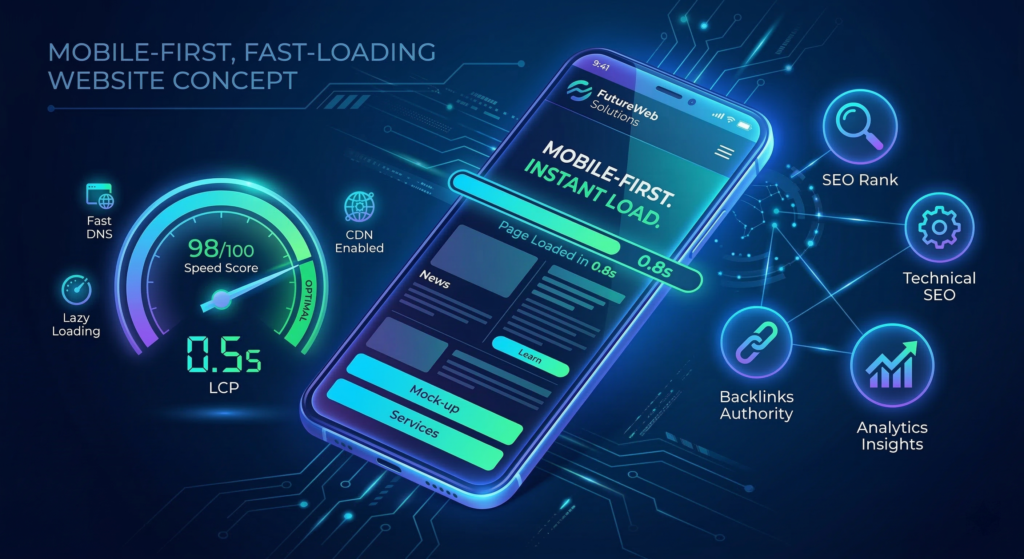
Since most users browse on mobile devices, following Mobile-First Website Design: Why It’s Critical in 2026 can also improve performance.
Why Professional Website Development Matters
Speed optimization is not just about plugins or tools, it requires proper website architecture, optimized code, and performance-focused design.
Businesses that invest in professional development benefit from:
- Faster loading websites
- Better SEO rankings
- Higher lead generation
- Improved user experience
If you’re planning to launch or upgrade your website, professional Website Development Services can ensure your site is optimized for both speed and conversions.
Conclusion
Website speed plays a critical role in both SEO performance and business conversions. A slow website can reduce search rankings, increase bounce rates, and drive potential customers away.
On the other hand, fast websites create better user experiences, improve search visibility, and generate more leads.
For businesses looking to grow online in 2026, investing in fast, optimized website development is no longer optional, it’s essential.
FAQs
How fast should a website load?
Ideally, a website should load in under 3 seconds to provide a good user experience and maintain strong SEO performance.
Does website speed affect Google rankings?
Yes. Google uses page speed as a ranking factor, and faster websites often perform better in search results.
What tools can check website speed?
You can test website speed using tools like Google PageSpeed Insights, GTmetrix, and Lighthouse.
Can slow websites reduce sales?
Yes. Slow loading pages increase bounce rates and can significantly reduce conversions and sales.