
In today’s digital world, successful businesses don’t rely on guesswork they rely on data. Website analytics allows companies to understand how users interact with their website and how those interactions lead to conversions, sales, and revenue.
When used correctly, website analytics becomes one of the most powerful tools for improving Return on Investment (ROI) by helping businesses optimize marketing, improve user experience, and reduce wasted spending.
What Is Website Analytics?
Website analytics is the process of collecting and analyzing data about website visitors and their behavior.
It helps businesses understand:
- Where visitors come from
- What pages they visit
- How long they stay
- What actions they take
- Where they leave the website
One of the most widely used tools is Google Analytics, which provides deep insights into website performance.
Official tool: https://analytics.google.com/
Why Website Analytics Is Important for ROI
ROI (Return on Investment) measures how much profit you earn compared to what you spend.
Website analytics improves ROI by helping businesses:
- Identify high-performing marketing channels
- Eliminate low-performing campaigns
- Improve website conversion rates
- Understand customer behavior
- Optimize content and design
Without analytics, businesses waste money on strategies that may not be working.
Understand Customer Behavior to Increase Conversions
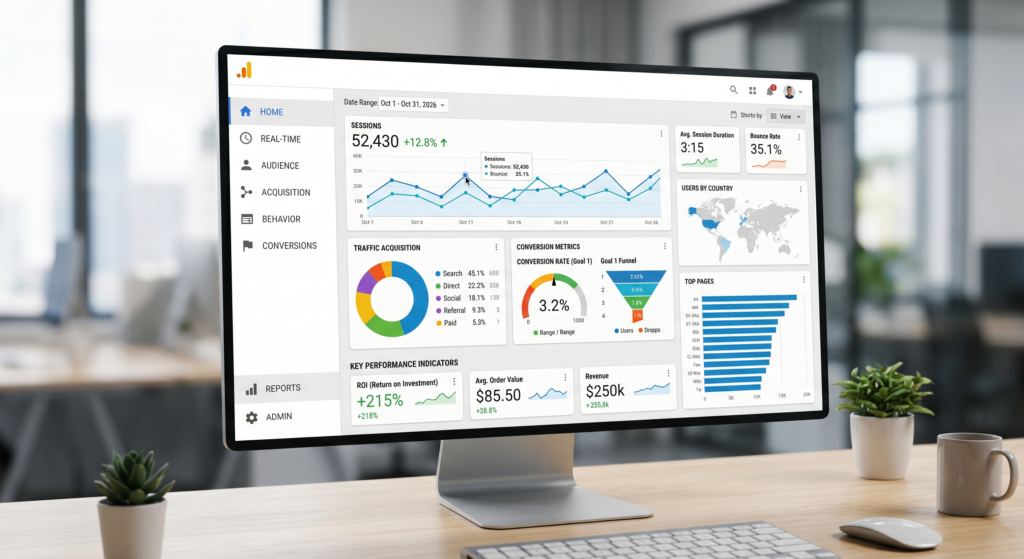
One of the biggest benefits of analytics is understanding how users interact with your website.
You can track:
- Which pages users visit most
- Where they click
- How far they scroll
- Where they exit
For example, if users leave your checkout page, it may indicate a problem in the buying process.
Improving these weak areas directly increases conversions and revenue.
You can explore conversion-focused strategies in:
Website Development for Lead Generation: Best Practices
Improve Marketing Performance Using Traffic Data
Website analytics shows where your traffic is coming from:
- Organic search (Google)
- Paid ads
- Social media
- Direct visits
- Referral websites
This helps businesses understand which channels deliver the best ROI.
For example, if Instagram brings more conversions than paid ads, you can shift your marketing budget accordingly.
Related reading:
Social Media Marketing for Businesses: Complete Growth Guide (2026)
Optimize Website Performance for Better ROI
Website speed and performance directly impact user experience and conversions.
Slow websites often cause:
- Higher bounce rates
- Lower engagement
- Reduced sales
Analytics tools help identify slow pages and performance issues.
Learn more here:
How Website Speed Impacts SEO & Conversions
Improve Landing Page Performance
Landing pages are where conversions happen.
Analytics helps identify:
- Which landing pages convert best
- Which pages have high bounce rates
- Where users drop off
By improving weak landing pages, businesses can increase ROI without increasing traffic.
Increase Conversion Rates with Data
Conversion rate is one of the most important business metrics.
It measures how many visitors complete actions such as:
- Making a purchase
- Filling out a contact form
- Subscribing to a newsletter
Even small improvements in conversion rate can significantly increase revenue.
Use A/B Testing to Improve Results
A/B testing allows businesses to compare two versions of a page to see which performs better.
You can test:
- Headlines
- Button colors
- Layouts
- Call-to-action text
This removes guesswork and ensures decisions are based on real data.
Reduce Marketing Waste
Without analytics, businesses often spend money on ineffective strategies.
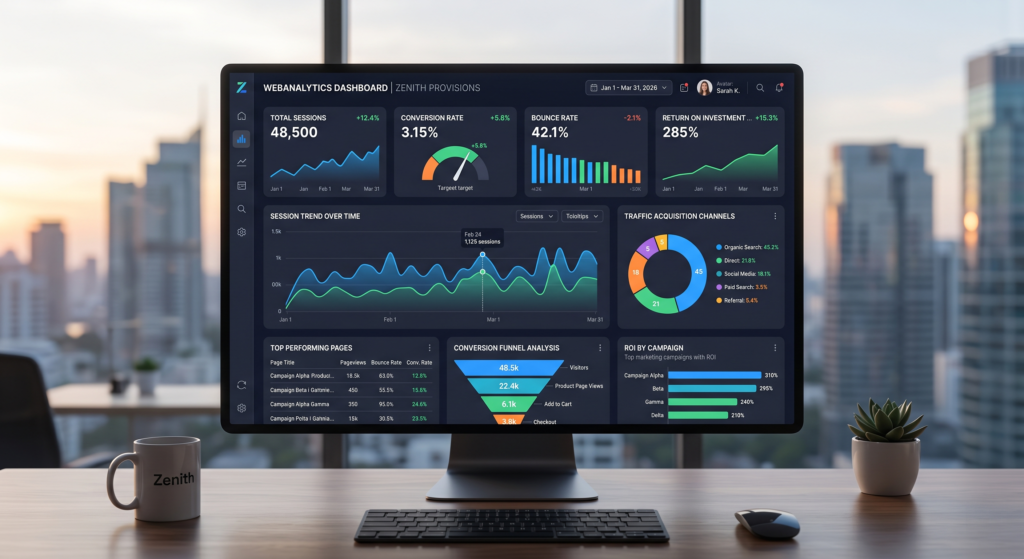
Analytics helps reduce waste by:
- Identifying low-performing ads
- Tracking customer journey
- Understanding what doesn’t work
This leads to smarter budgeting and higher ROI.
Real-World Impact of Analytics
Big companies rely heavily on data-driven decisions.
For example:
- Amazon uses analytics to optimize product recommendations
- Netflix uses viewing data to personalize content
- Google uses analytics to improve search experience
These companies show how powerful data-driven decisions can be for growth.
Why Professional Website Development Matters
Analytics only works properly when your website is built correctly.
Professional development ensures:
- Proper tracking setup
- Clean data collection
- Conversion tracking accuracy
- SEO-friendly structure
Explore:
Website Development Services for Businesses: Complete Guide
External Resources
- Google Analytics Guide: https://support.google.com/analytics/
- Data-Driven Marketing Insights: https://blog.hubspot.com/marketing
- User Behavior Analysis: https://www.hotjar.com/blog/user-behavior/
Conclusion
Website analytics is one of the most powerful tools for improving business ROI. It helps businesses understand customer behavior, optimize marketing strategies, improve website performance, and increase conversions.
In 2026, successful businesses are not those who guess they are those who track, analyze, and optimize continuously. Businesses that invest in professional Website Development Services can create websites that are accessible, SEO-friendly, and conversion-focused.
FAQs
What is website analytics used for?
Website analytics is used to track visitor behavior and improve website performance, marketing, and conversions.
How does website analytics improve ROI?
It helps businesses optimize marketing spend, improve conversions, and eliminate ineffective strategies.
Which tools are best for website analytics?
Popular tools include Google Analytics, Hotjar, and Microsoft Clarity.
Is website analytics important for small businesses?
Yes, even small businesses can use analytics to understand customers and improve growth strategies.