Types of Logos
Choosing the right logo style is one of the most important decisions in branding. Your logo is not just a visual it represents your identity, values, and how customers perceive your business.
But with so many types of logos available, how do you decide which one is right for you?
In this guide, we’ll break down the most popular logo types, their advantages, and how to choose the best logo style for your business in 2026.
Why Choosing the Right Logo Style Matters
Your logo style directly impacts:
- Brand recognition
- Customer trust
- Market positioning
- Visual identity consistency
Learn the fundamentals here:
What Makes a Good Logo? Design Principles Explained for Businesses
Also explore:
How to Choose the Best Logo for Your Business Industry in 2026
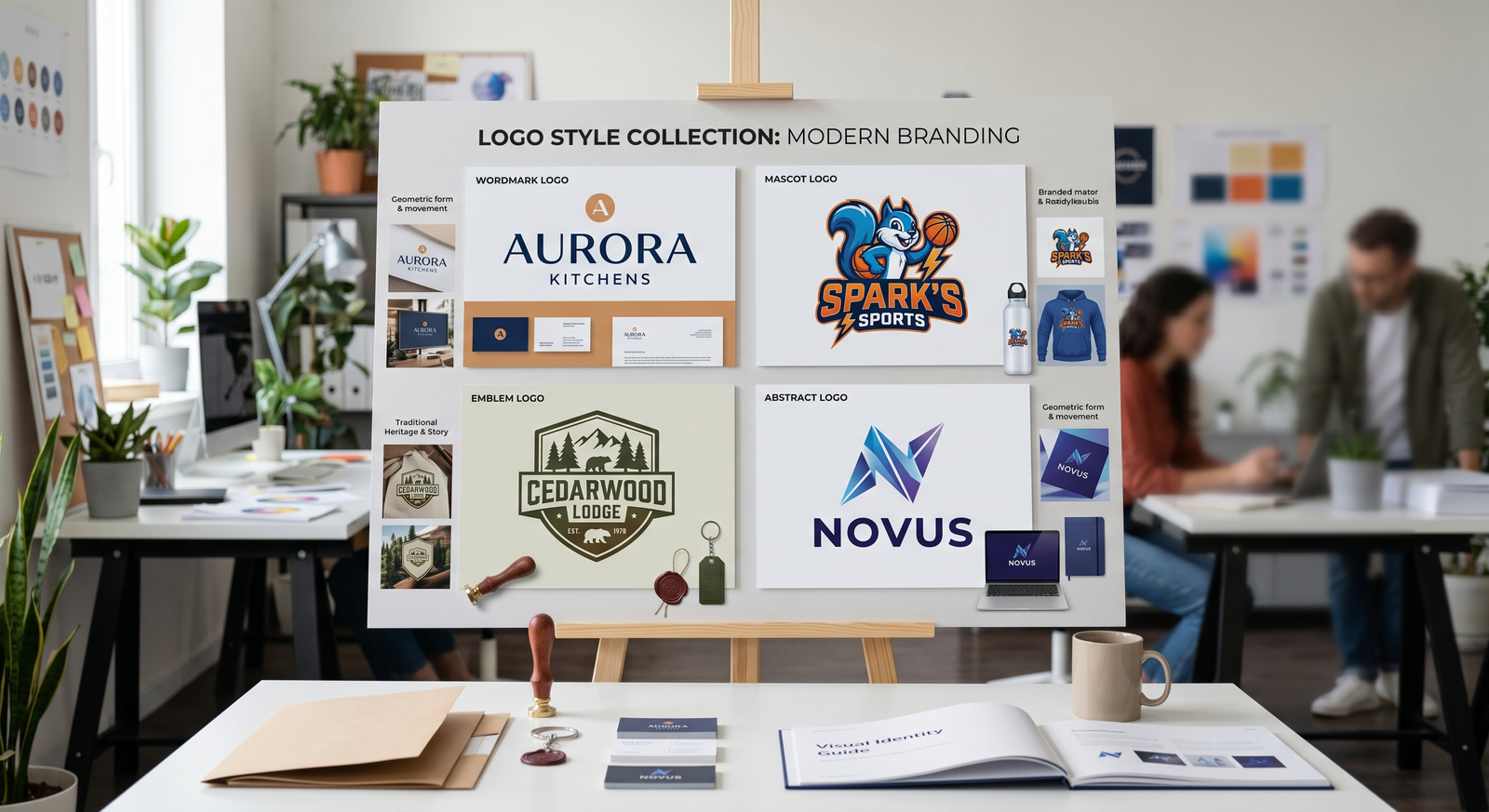
1. Wordmark (Logotype)
A wordmark logo is based on your business name using custom typography.
Examples: Google, Coca-Cola
Best for:
- Businesses with unique names
- Brands focusing on recognition
Pros:
- Simple and memorable
- Strong brand identity
Typography plays a key role here:
Typography in Logo Design: Fonts That Boost Brand Recognition
2. Lettermark (Monogram)
Lettermarks use initials instead of full names.
Examples: IBM, HBO
Best for:
- Businesses with long names
- Corporate brands
Pros:
- Clean and minimal
- Easy to remember
3. Brandmark (Symbol/Icon)
A brandmark is a symbol or icon without text.
Examples: Apple, Nike
Best for:
- Established brands
- Global businesses
Pros:
- Highly recognizable
- Language-independent
Learn how simplicity works:
Minimalist vs Detailed Logos: Which Works Best for Your Business?
4. Combination Mark
This combines text and symbol in one logo.
Examples: Adidas, Burger King
Best for:
- Most businesses
- Startups building brand identity
Pros:
- Flexible and versatile
- Strong branding
5. Emblem Logo
An emblem logo includes text inside a symbol or badge.
Examples: Starbucks, Harley-Davidson
Best for:
- Traditional brands
- Educational institutions
Pros:
- Classic and authoritative
- Strong visual identity
6. Mascot Logo
A mascot logo uses a character or illustration.
Examples: KFC, Pringles
Best for:
- Family-friendly brands
- Entertainment businesses
Pros:
- Engaging and fun
- Builds emotional connection
Learn emotional branding:
How to Make a Logo That Converts: Design Psychology Tips
7. Abstract Logo
Abstract logos use geometric shapes or unique symbols.
Examples: Pepsi, Airbnb
Best for:
- Modern brands
- Tech companies
Pros:
- Unique and distinctive
- Flexible meaning
Explore trends:
Logo Design Trends That Make Brands Stand Out in 2026
8. Dynamic / Animated Logo
These logos use motion for digital platforms.
Best for:
- Digital-first brands
- Startups and tech companies
Learn more:
Animated Logos: When and Why Your Brand Should Consider One

How to Choose the Right Logo Type
1. Understand Your Brand
Your logo should reflect your personality and values.
2. Know Your Audience
Choose a style that resonates with your target market.
3. Consider Scalability
Your logo should work across all platforms.
4. Keep It Simple
Simple logos are easier to recognize and remember.
Avoid complexity:
Top 10 Logo Design Mistakes That Kill Your Brand Credibility
Common Mistakes When Choosing Logo Types
- Choosing trends over strategy
- Ignoring brand identity
- Overcomplicating design
- Using generic templates
Avoid cheap solutions:
Why Cheap Logos Hurt Brand Credibility in 2026
Why Professional Logo Design Matters
Choosing the right type is just the beginning, execution is everything.
A professional designer ensures:
- Proper strategy
- Unique design
- Brand consistency
- Scalability
Learn more:
Professional Logo Design Services: What Businesses Should Expect
External References
- https://99designs.com/blog/logo-branding/types-of-logos/
- https://www.canva.com/learn/logo-design/
- https://www.adobe.com/creativecloud/design/discover/logo-design.html
- https://www.smashingmagazine.com/category/design/
- https://www.interaction-design.org/literature/topics/design
Conclusion
There is no one-size-fits-all logo. The best logo style depends on your business type, audience, and branding goals.
Whether you choose a wordmark, symbol, or combination logo, the key is to create something that is memorable, scalable, and aligned with your brand identity.
In 2026, successful brands are those that choose the right logo style and execute it professionally.
FAQs
Which type of logo is best for a startup?
Combination logos are often the best choice because they offer flexibility and strong branding.
Can I change my logo type later?
Yes, many businesses evolve their logo style over time.
Are symbol-only logos effective?
Yes, but they work best for established brands with strong recognition.
How do I choose the right logo type?
Consider your brand identity, audience, and industry before deciding.