Introduction to Logo Psychology
Why do certain logos instantly make us think of trust, luxury, innovation, or excitement?
The answer lies in psychology.
A logo is far more than a visual symbol. It acts as the face of a brand and creates an immediate emotional response in the minds of customers.
Research consistently shows that people form first impressions about a brand within seconds. In many cases, your logo is one of the first things potential customers notice.
A thoughtfully designed logo can:
- Build trust
- Create emotional connections
- Improve brand recall
- Influence purchasing decisions
- Differentiate your business from competitors
Understanding logo psychology helps businesses create visual identities that resonate with customers and support long-term growth.
This guide explains the science behind logo design and how businesses can use psychology to create logos that truly work.
What Is Logo Psychology?
Logo psychology refers to the way visual elements influence people’s emotions, perceptions, and behaviors.
These elements include:
- Colors
- Shapes
- Typography
- Symbols
- Spacing
- Composition
Every design decision communicates something to customers.
For example:
- Blue often represents trust.
- Green is associated with growth.
- Circular shapes feel friendly.
- Sharp angles communicate strength and innovation.
The best logos intentionally use these psychological principles to support brand positioning.
Why Logo Psychology Matters
Consumers make emotional decisions.
Studies in consumer behavior show that emotions significantly influence purchasing decisions.
A logo can shape perceptions such as:
- Trustworthiness
- Professionalism
- Innovation
- Luxury
- Reliability
- Friendliness
A poorly designed logo may create the opposite impression.
Related Reading:
Internal Link: How Logo Design Impacts Customer Trust & Loyalty
The Science Behind First Impressions
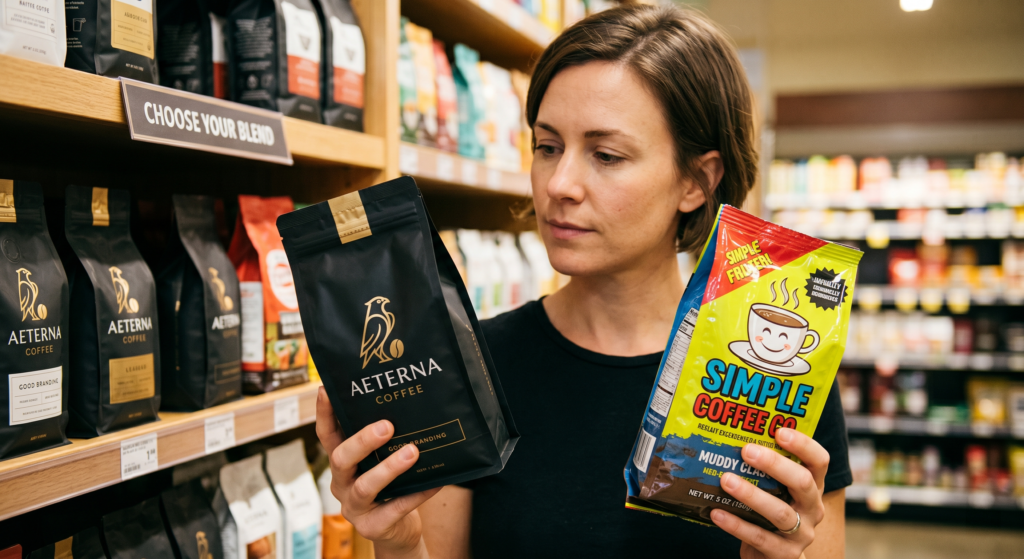
People process visuals much faster than text.
Within seconds, customers form opinions about:
- Brand quality
- Credibility
- Professionalism
- Value
This means your logo often influences whether customers:
- Explore your website
- Follow your social media
- Contact your business
- Make a purchase
Related Reading:
Internal Link: Why a Professional Logo Is Critical for Brand Success
Color Psychology in Logo Design
Colors are one of the most powerful psychological tools in branding.
Logo Color Meanings
| Color | Psychological Meaning | Best For |
|---|---|---|
| Blue | Trust, security, reliability | Finance, technology |
| Red | Energy, passion, urgency | Food, entertainment |
| Green | Growth, health, nature | Healthcare, sustainability |
| Yellow | Optimism, happiness | Retail, children brands |
| Black | Luxury, sophistication | Fashion, premium brands |
| Orange | Creativity, enthusiasm | Startups, marketing agencies |
| Purple | Wisdom, luxury | Beauty, coaching |
| White | Simplicity, cleanliness | Healthcare, technology |
Example:
A bank using bright neon colors might feel less trustworthy than one using blue.
A luxury brand rarely uses playful colors because customers expect sophistication.
Related Reading:
Internal Link: Logo Color Psychology: Choosing the Right Colors for Your Brand
Shape Psychology in Logo Design
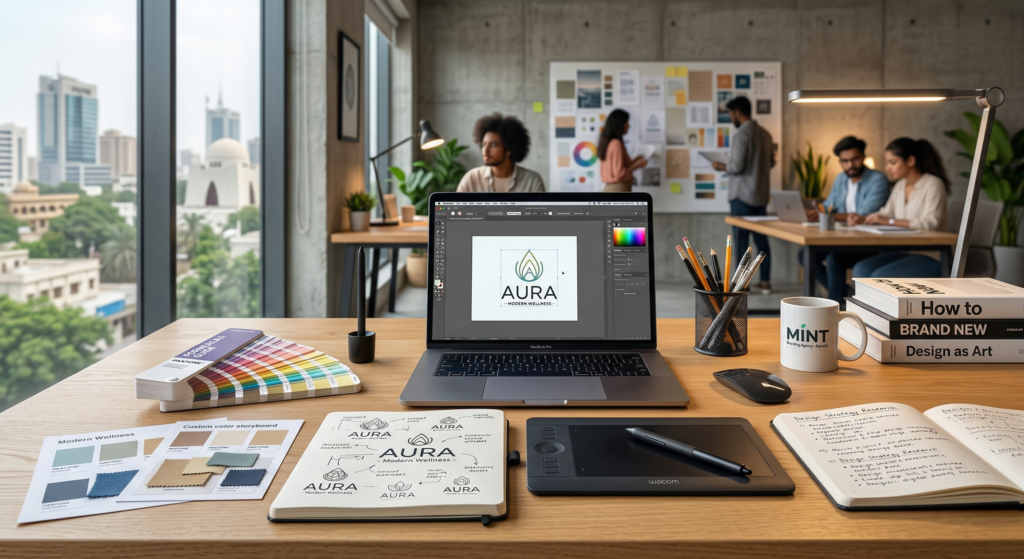
Shapes communicate emotions before customers even read your business name.
Circle Logos
Communicate:
- Community
- Friendship
- Unity
- Warmth
Examples:
- Social platforms
- Nonprofits
- Community organizations
Square Logos
Represent:
- Stability
- Professionalism
- Reliability
Common in:
- Financial institutions
- Corporate businesses
Triangle Logos
Communicate:
- Innovation
- Growth
- Strength
Popular among:
- Technology companies
- Construction businesses
Organic Shapes
Represent:
- Creativity
- Flexibility
- Friendliness
Often used by:
- Creative agencies
- Lifestyle brands
Typography Psychology in Logo Design
Fonts influence how customers perceive a business.
Serif Fonts
Create feelings of:
- Trust
- Tradition
- Authority
Best for:
- Law firms
- Financial companies
- Luxury brands
Sans-Serif Fonts
Communicate:
- Simplicity
- Modernity
- Innovation
Best for:
- Technology companies
- Startups
- Digital businesses
Script Fonts
Represent:
- Elegance
- Creativity
- Personality
Best for:
- Beauty brands
- Wedding businesses
- Luxury products
Bold Fonts
Communicate:
- Confidence
- Strength
- Leadership
Best for:
- Sports brands
- Construction companies
Related Reading:
Internal Link: Typography in Logo Design: Fonts That Boost Brand Recognition
Symbolism in Logo Design
Symbols create immediate recognition.
Examples include:
- Arrows representing progress
- Mountains representing strength
- Leaves representing sustainability
- Shields representing security
Good symbols make logos:
- Easier to remember
- More meaningful
- More recognizable
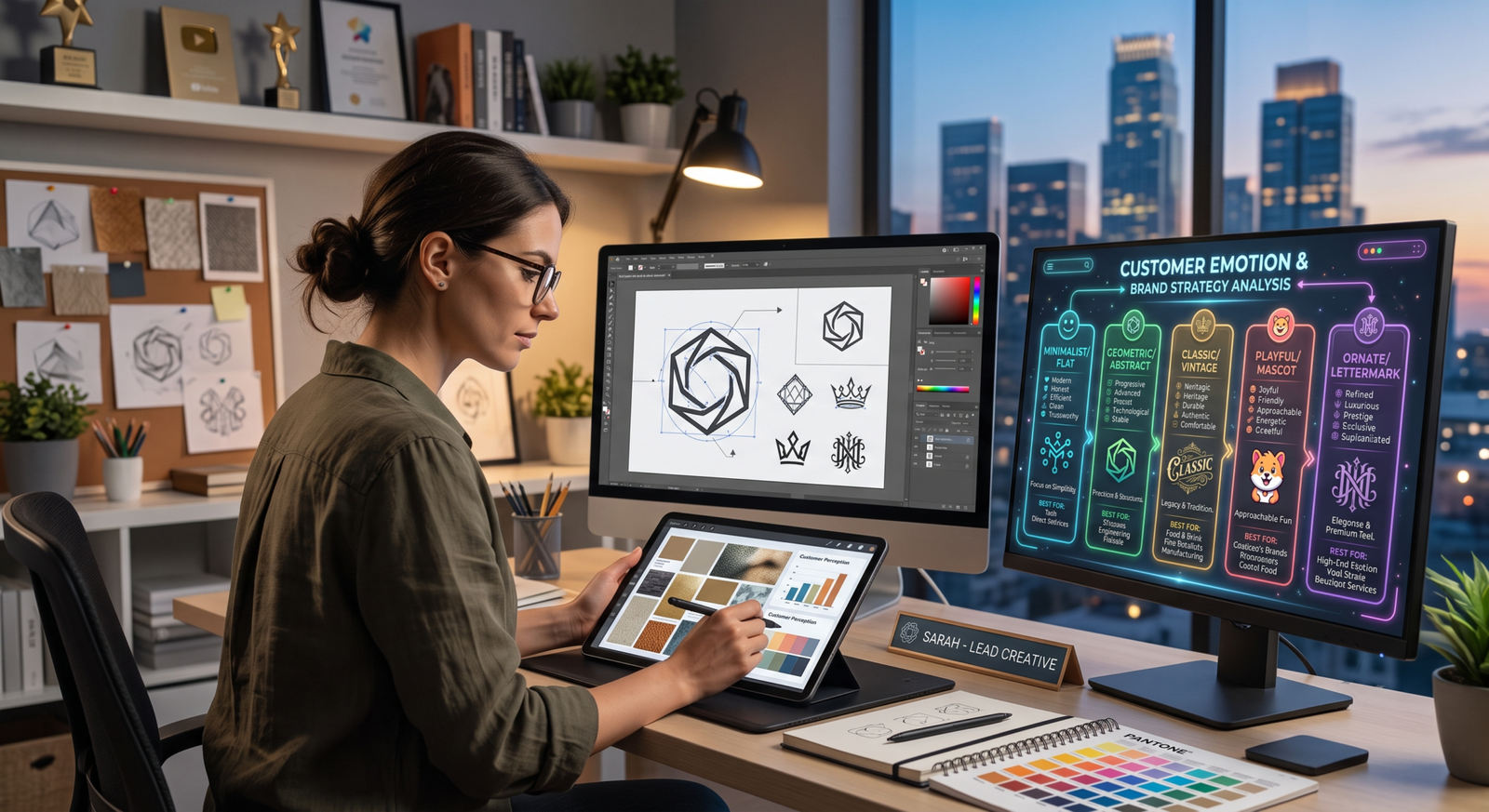
Emotional Branding Through Logos
People often buy based on emotions.
Your logo should support the emotional experience you want customers to have.
Luxury Brand
Emotions:
- Prestige
- Exclusivity
Design:
- Minimal colors
- Elegant typography
Family Restaurant
Emotions:
- Comfort
- Warmth
Design:
- Rounded shapes
- Friendly colors
Technology Startup
Emotions:
- Innovation
- Confidence
Design:
- Simple typography
- Clean lines
The Psychology of Simplicity
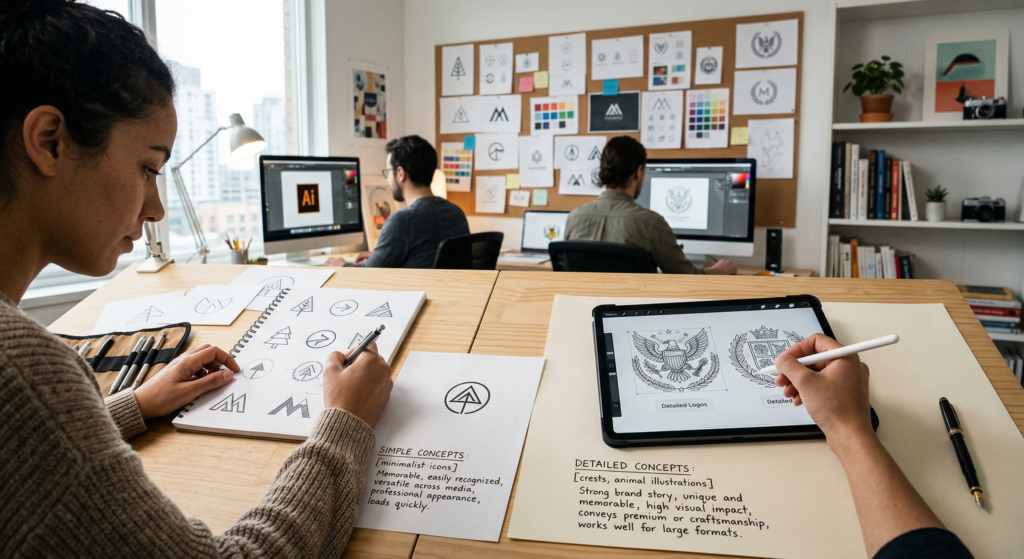
Simple logos are easier to:
- Recognize
- Remember
- Reproduce
- Trust
Complex logos often:
- Confuse customers
- Reduce memorability
- Appear outdated
Related Reading:
Internal Link: Minimalist vs Detailed Logos: Which Works Best for Your Business?
Why Familiarity Builds Trust
People naturally trust what they recognize.
A consistent logo helps create:
- Brand recognition
- Emotional familiarity
- Customer loyalty
The more customers see your logo, the more comfortable they become with your brand.
Related Reading:
Internal Link: Logo Design for Growing Businesses: What Actually Works
Logo Psychology for Different Industries
| Industry | Recommended Psychology |
|---|---|
| Healthcare | Trust and care |
| Finance | Stability and security |
| Technology | Innovation and simplicity |
| Food | Energy and appetite |
| Fashion | Luxury and elegance |
| Education | Knowledge and reliability |
Common Logo Psychology Mistakes
Choosing Colors Randomly
Colors should support brand positioning.
Following Trends Blindly
Trends change quickly.
Using Too Many Elements
Simplicity improves recognition.
Ignoring Target Audience
A logo should appeal to ideal customers.
Copying Competitors
Differentiation matters.
Related Reading:
Internal Link: Logo Design Mistakes Businesses Make (And How to Avoid Them) in 2026
How to Use Logo Psychology in Your Business
Step 1
Define your brand personality.
Step 2
Identify your target audience.
Step 3
Choose colors intentionally.
Step 4
Select typography carefully.
Step 5
Use meaningful symbols.
Step 6
Keep the design simple.
Step 7
Test customer reactions.
Practical Example
Premium Law Firm
Colors: Navy and gold.
Typography: Serif.
Shapes: Structured and symmetrical.
Psychological Message: Authority and trust.
Creative Marketing Agency
Colors: Orange and purple.
Typography: Modern sans-serif.
Shapes: Dynamic and organic.
Psychological Message: Creativity and innovation.
External Resources
- Adobe Logo Design Resources
- HubSpot Branding Guide
- Semrush Marketing Resources
- Shopify Logo Design Guide
Frequently Asked Questions (FAQ)
What is logo psychology?
It studies how visual elements in logos influence customer perceptions and behavior.
Why is logo psychology important?
It helps businesses create logos that build trust and improve recognition.
Do colors really influence buying decisions?
Yes. Colors significantly affect emotions and perceptions.
Which logo color builds trust?
Blue is commonly associated with trust and reliability.
Why are simple logos more effective?
Simple logos are easier to remember and recognize.
Can a logo affect sales?
Indirectly, yes. Strong branding improves trust and conversion rates.
How do shapes affect logo perception?
Different shapes create different emotional responses.
Does typography matter in logos?
Absolutely. Fonts communicate personality and professionalism.
Should startups invest in professional logo design?
Yes. First impressions can influence business growth.
Can logo psychology improve brand loyalty?
Yes. Emotional connections increase customer loyalty.
Conclusion
A logo is far more than a graphic element. It’s a psychological tool that shapes how customers perceive your business.
The right combination of colors, shapes, typography, and symbols can communicate trust, innovation, luxury, or reliability in seconds.
Businesses that understand logo psychology create stronger emotional connections, improve brand recognition, and build lasting customer relationships.
In 2026, strategic logo design is not optional it’s a competitive advantage.
Call-to-Action
Need a logo that does more than look good?
Omocracy helps businesses create strategic logos built on psychology, branding principles, and customer behavior insights.
Contact Omocracy today and design a logo that influences how customers think, feel, and buy.