Introduction
Your logo is often the first visual interaction customers have with your business. Before they read your website content, speak with your sales team, or purchase your products, they form an impression based on your brand identity.
A well-designed logo communicates professionalism, trust, and credibility. A poorly designed logo can create the opposite effect, making a business appear outdated, unprofessional, or unreliable.
Unfortunately, many businesses make costly logo design mistakes that weaken their brand and limit growth opportunities. Some choose trendy designs that quickly become outdated. Others prioritize personal preferences over strategic branding. Many overlook scalability, readability, and customer perception.
The good news is that these mistakes are avoidable.
In this guide, we’ll explore the most common logo design mistakes businesses make, explain why they hurt brand performance, and show how to create a logo that supports long-term success.
Why Logo Design Matters
A logo is more than a visual symbol.
It serves as:
- A brand identifier
- A trust-building tool
- A marketing asset
- A recognition device
- A competitive differentiator
Strong logos help businesses:
- Build credibility
- Improve memorability
- Increase customer trust
- Strengthen brand consistency
Related Reading:
Internal Link: Why a Professional Logo Is Critical for Brand Success
The Cost of Poor Logo Design
Many businesses underestimate how much a weak logo can affect performance.
Poor logo design can lead to:
| Impact | Business Consequence |
|---|---|
| Low credibility | Reduced trust |
| Weak recognition | Lower brand recall |
| Confusing messaging | Lost opportunities |
| Inconsistent branding | Customer uncertainty |
| Outdated appearance | Competitive disadvantage |
A logo may seem like a small element, but it influences countless customer interactions.
15 Common Logo Design Mistakes Businesses Make
1. Following Design Trends Blindly
Design trends come and go.
A logo based entirely on current trends may look outdated within a few years.
Example
- Overused gradients
- Trendy abstract icons
- Temporary design fads
Better Approach
Focus on timeless design principles.
Related Reading:
Internal Link: Logo Design Trends That Make Brands Stand Out in 2026
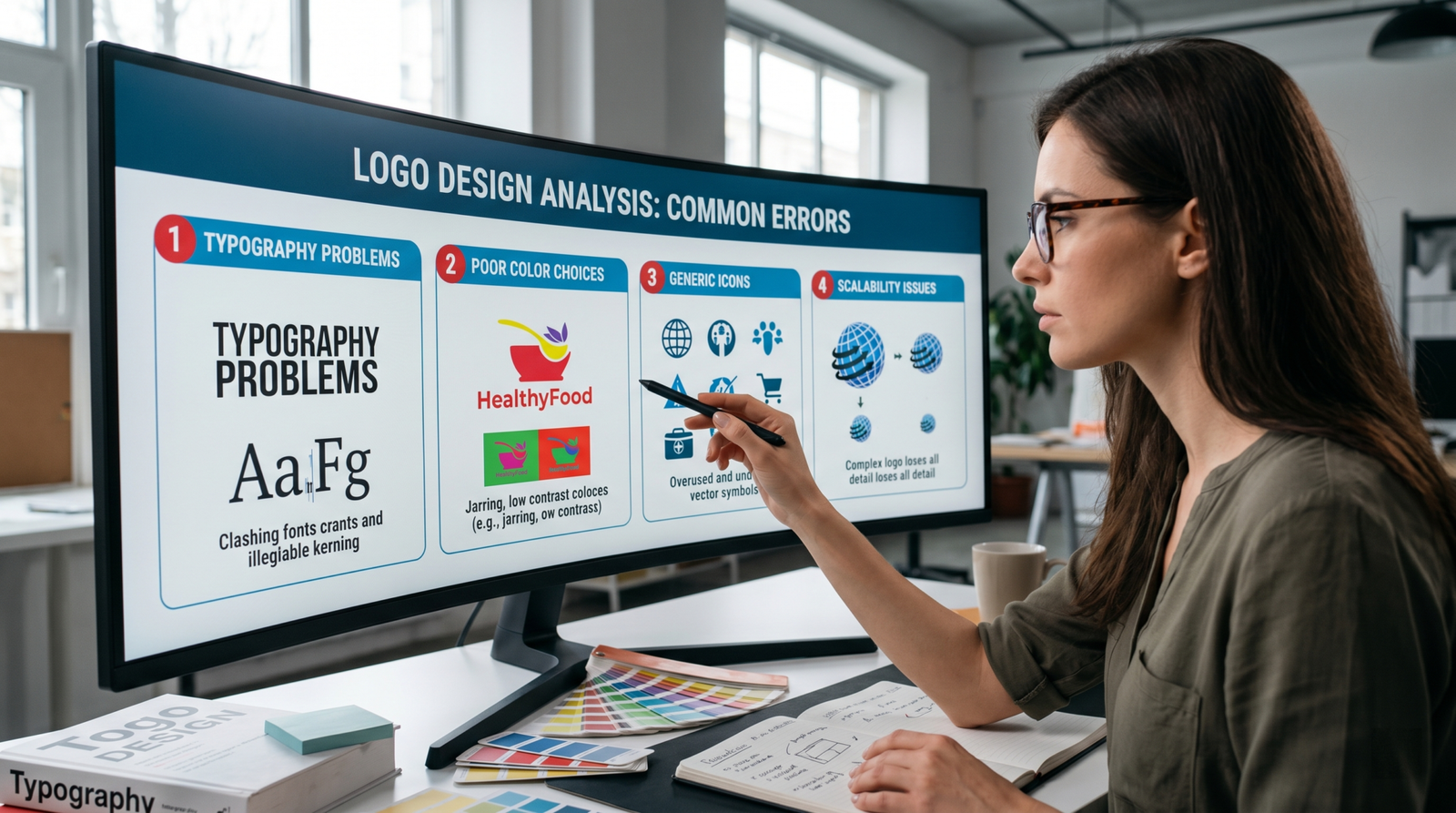
2. Making the Logo Too Complex
Complex logos often:
- Become difficult to recognize
- Lose clarity at smaller sizes
- Reduce memorability
Signs of Overcomplication
- Excessive details
- Multiple symbols
- Too many effects
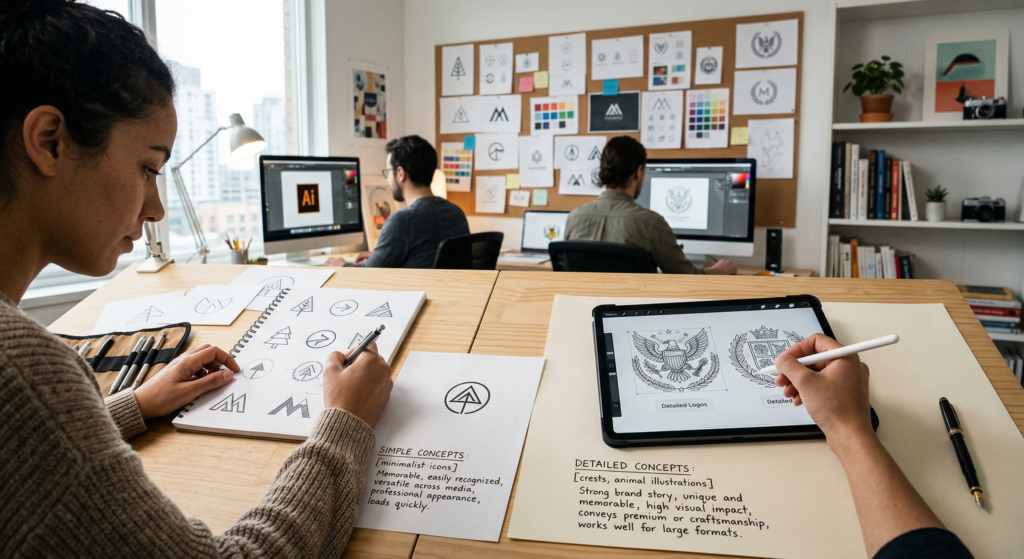
Simple logos are often more effective.
Related Reading:
Internal Link: Minimalist vs Detailed Logos: Which Works Best for Your Business?
3. Using Generic Stock Icons
Many businesses use symbols found in logo generators or stock libraries.
This creates:
- Lack of uniqueness
- Weak differentiation
- Trademark concerns
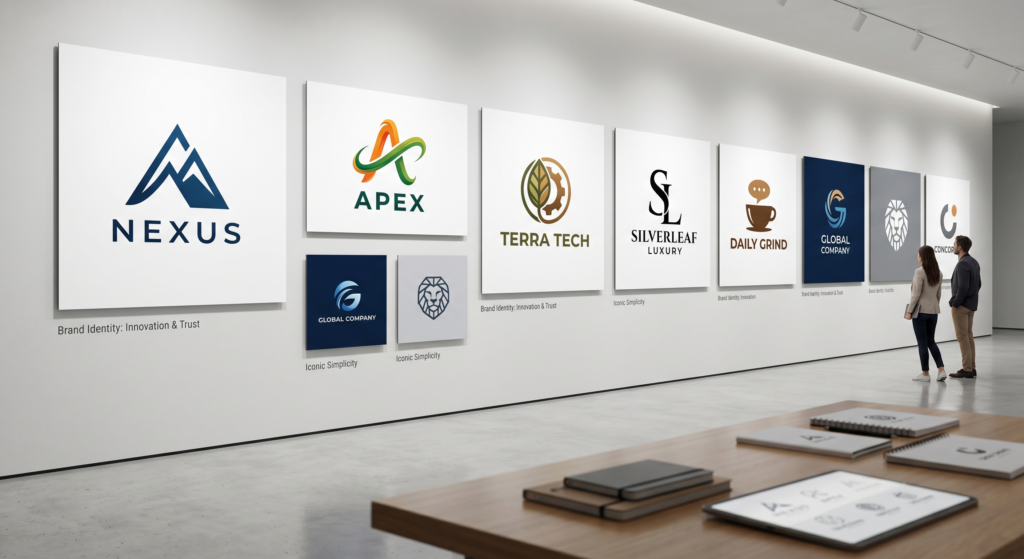
Customers should instantly associate your logo with your brand not hundreds of other businesses.
4. Choosing the Wrong Colors
Color significantly influences customer perception.
Poor color choices can communicate unintended messages.
Example
A luxury brand using overly playful colors may appear less premium.
Related Reading:
Internal Link: Logo Color Psychology: Choosing the Right Colors for Your Brand
5. Poor Typography Selection
Typography communicates personality.
Choosing the wrong font can make a logo appear:
- Unprofessional
- Outdated
- Generic
- Difficult to read
Related Reading:
Internal Link: Typography in Logo Design: Fonts That Boost Brand Recognition
6. Designing Based on Personal Preference
One of the biggest mistakes business owners make is designing for themselves rather than their customers.
Ask:
- What appeals to the target audience?
- What aligns with the brand strategy?
- What communicates trust?
Effective logos are customer-focused.
7. Ignoring Brand Strategy
A logo should reflect business positioning.
Without strategy, logos become random visual elements.
A professional logo supports:
- Brand values
- Market positioning
- Customer expectations
Related Reading:
Internal Link: Logo Design Ultimate Guide for Businesses (2026)
8. Copying Competitors
Many businesses imitate successful brands.
This creates:
- Brand confusion
- Lack of originality
- Reduced differentiation
The goal is not to look similar.
The goal is to stand out.
Related Reading:
Internal Link: How to Choose the Best Logo for Your Business Industry in 2026
9. Using Too Many Colors
Too many colors create visual clutter.
Professional logos typically use:
- One primary color
- One secondary color
- Limited accent colors
Simplicity improves recognition.
10. Poor Scalability
Your logo must work at every size.
Common Problems
- Tiny details disappear
- Text becomes unreadable
- Icons lose clarity
A logo should look good on:
- Business cards
- Websites
- Social media profiles
- Billboards
11. Relying Completely on DIY Logo Generators
Logo generators may be affordable, but they often produce:
- Generic results
- Weak strategy
- Similar-looking logos
Related Reading:
Internal Link: DIY Logo Design Tools vs Hiring a Professional Designer
12. Ignoring Black-and-White Versions
A logo should work without color.
Many businesses discover problems when printing materials or using monochrome applications.
Test your logo in:
- Black
- White
- Grayscale
13. Using Multiple Font Styles
Too many fonts reduce consistency.
Best practice:
- One primary font
- One supporting font (if needed)
Simple typography improves professionalism.
14. Designing for Today Instead of the Future
A logo should support future growth.
Questions to ask:
- Will this logo still work in five years?
- Can it support business expansion?
- Does it limit future opportunities?
Related Reading:
Internal Link: Logo Design for Growing Businesses: What Actually Works
15. Skipping Professional Feedback
Business owners often become emotionally attached to logo concepts.
External feedback helps identify:
- Readability issues
- Perception problems
- Brand alignment concerns
Constructive feedback improves results.
Comparison Table: Bad vs Good Logo Design Practices
| Poor Practice | Better Practice |
|---|---|
| Trend-focused design | Timeless design principles |
| Complex visuals | Simple, memorable design |
| Generic icons | Unique concepts |
| Random colors | Strategic color selection |
| Weak typography | Purposeful typography |
| Personal preferences | Audience-focused decisions |
| No testing | Multi-platform testing |
| DIY shortcuts | Strategic design process |
How Professional Designers Avoid These Mistakes
Professional logo designers typically follow a structured process:
Research
Understanding the business and audience.
Competitor Analysis
Identifying opportunities for differentiation.
Concept Development
Creating original ideas.
Testing
Ensuring performance across different applications.
Refinement
Improving based on feedback.
Related Reading:
Internal Link: Logo Design Process: Step-by-Step Guide from Concept to Final Design
Internal Link: Logo Design Process Explained: Step-by-Step Guide for Businesses (2026)
Practical Example
Imagine two accounting firms launching in the same city.
Firm A
- Generic stock icon
- Script font
- Complex design
Firm B
- Custom symbol
- Professional typography
- Strategic color palette
- Scalable design
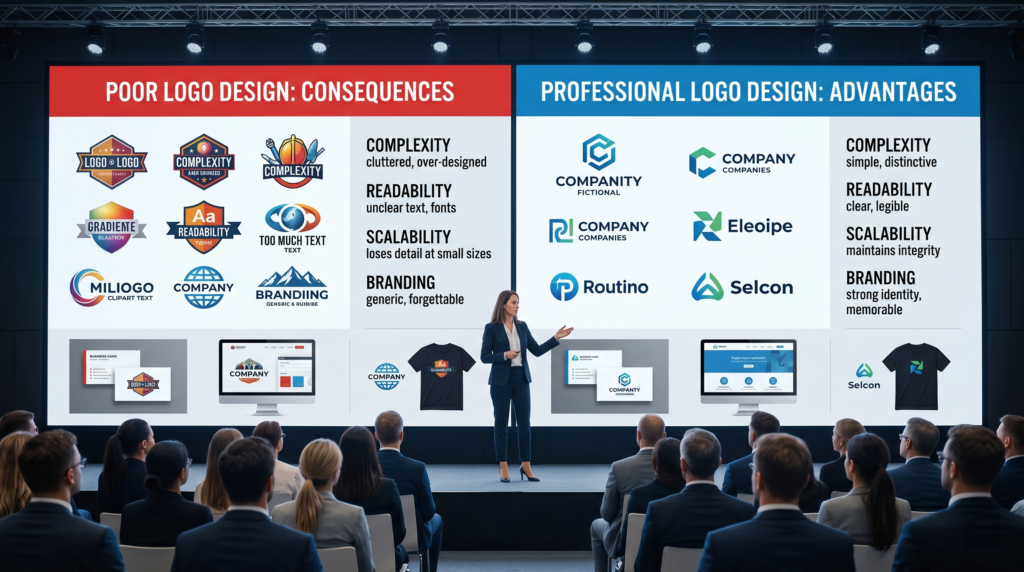
Customers are more likely to perceive Firm B as established and trustworthy, even before engaging with the business.
This demonstrates how logo quality influences perception.
Signs Your Current Logo Has Problems
Ask yourself:
- Does it look outdated?
- Is it difficult to read?
- Does it resemble competitors?
- Does it scale well?
- Does it represent your current business?
If you answered “yes” to several concerns, it may be time for an update.
Related Reading:
Internal Link: Signs Your Business Needs a New Logo
Internal Link: When Should You Redesign Your Business Logo?

10 Actionable Tips to Avoid Logo Design Mistakes
1. Start with brand strategy.
2. Research competitors thoroughly.
3. Keep the design simple.
4. Prioritize scalability.
5. Use professional typography.
6. Choose colors strategically.
7. Avoid design trends that age quickly.
8. Test logos across multiple platforms.
9. Gather objective feedback.
10. Invest in professional design when possible.
Conclusion
Logo design mistakes can have lasting consequences for brand perception, customer trust, and business growth. While many businesses focus on aesthetics alone, successful logos are built on strategy, simplicity, scalability, and audience understanding.
By avoiding common mistakes and following proven design principles, businesses can create logos that strengthen recognition, support credibility, and remain effective for years to come.

Call-To-Action
Need a logo that builds trust and differentiates your business?
Omocracy creates professional logos backed by strategy, research, and branding expertise to help businesses establish a strong and memorable identity.
Contact Omocracy today and invest in a logo designed for long-term success.
External Resources
FAQs
What is the most common logo design mistake?
Overcomplicating the design is one of the most common mistakes.
Why do generic logos hurt branding?
They make it difficult for customers to distinguish your business from competitors.
Should businesses follow logo design trends?
Only selectively. Timeless design principles should remain the priority.
How many colors should a logo use?
Typically one to three colors work best.
Why is scalability important?
A logo must remain effective across all sizes and applications.
Are logo generators a good option?
They can work for basic needs but often lack originality and strategy.
Can a poor logo hurt sales?
Yes. Brand perception directly influences customer trust and purchase decisions.
How often should logos be updated?
Only when business goals, audiences, or branding requirements change significantly.
What role does typography play?
Typography influences how customers perceive the brand personality.
Is professional logo design worth the investment?
For most businesses, yes. Professional design supports credibility and long-term growth.