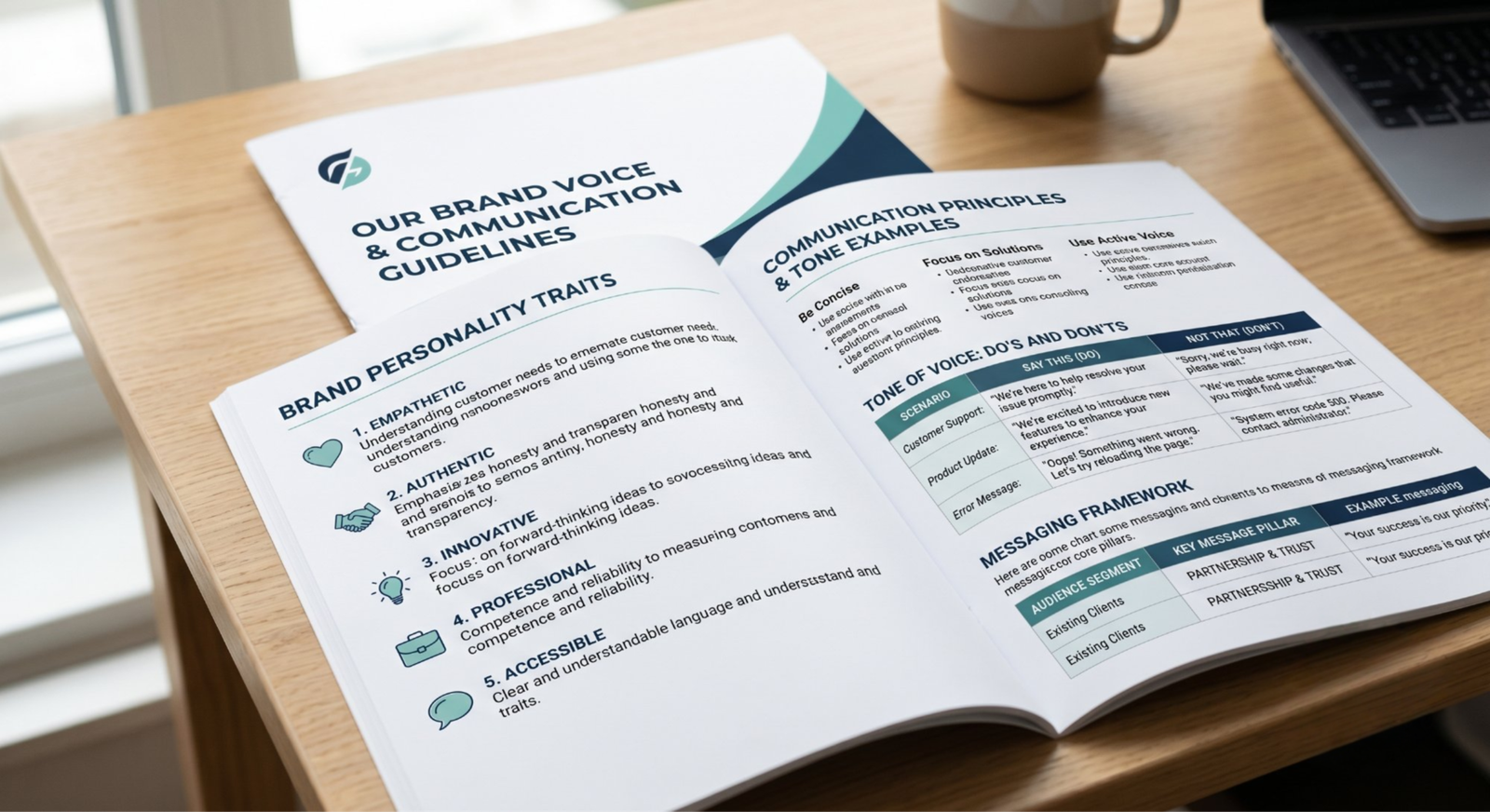
Every successful brand has a recognizable way of communicating.
You can often identify a company simply by reading one of its social media posts, advertisements, or emails. That’s the power of a strong brand voice.
A brand’s voice isn’t just about the words it uses, it’s about personality, emotions, and the experience it creates for customers.
Without clear brand voice guidelines, businesses often sound inconsistent across different channels. One social media post may sound professional, another casual, and a customer support email might sound entirely different.
This inconsistency can confuse customers and weaken trust.
A well-defined brand voice helps businesses:
- Build brand recognition
- Increase customer trust
- Improve marketing effectiveness
- Create emotional connections
- Maintain consistency across all platforms
This guide explains how to create brand voice guidelines that strengthen your brand and improve communication in 2026.
What Are Brand Voice Guidelines?
Brand voice guidelines are documented rules that explain how a business communicates with its audience.
They define:
- Personality
- Tone
- Language choices
- Messaging style
- Writing standards
- Communication principles
These guidelines ensure everyone in the company communicates consistently.

Why Brand Voice Matters
People connect with brands that feel human.
A strong voice helps businesses:
Build Trust
Consistency creates familiarity.
Improve Recognition
Customers recognize your messaging instantly.
Strengthen Brand Identity
Your voice becomes part of your overall brand.
Create Emotional Connections
Personality makes brands memorable.
Internal Link: Social Media Branding Tips: Consistent Visuals & Messaging for 2026
Benefits of Strong Brand Voice Guidelines
- Consistent messaging
- Better customer experience
- Stronger brand loyalty
- Improved content quality
- Easier content creation
- Stronger social media presence
- Better team collaboration
Brand Voice vs Brand Tone
Many businesses confuse these two concepts.
| Brand Voice | Brand Tone |
|---|---|
| Permanent personality | Changes depending on the situation |
| Consistent across channels | Flexible based on context |
| Defines who you are | Defines how you communicate in specific moments |
| Rarely changes | Frequently changes |
Example
Brand Voice: Friendly and professional.
Tone in a Celebration Post: Excited and energetic.
Tone During a Service Outage: Calm and empathetic.
Why Consistency Matters
Imagine if a company:
- Sounds formal on LinkedIn
- Uses slang on Instagram
- Writes robotic customer emails
Customers become confused.
Consistency improves:
- Recognition
- Trust
- Professionalism
- Customer loyalty
Related Reading:
Internal Link: How Branding Impacts Customer Trust & Buying Decisions

The Four Core Elements of Brand Voice
1. Personality
Your brand’s human characteristics.
Examples:
- Friendly
- Professional
- Innovative
- Confident
- Helpful
2. Tone
How your brand communicates in different situations.
Examples:
- Educational
- Inspirational
- Empathetic
- Enthusiastic
3. Language
The words and phrases your brand uses.
Examples:
- Simple language
- Industry terminology
- Casual expressions
4. Messaging
Your key communication themes.
Examples:
- Innovation
- Reliability
- Customer success
- Simplicity
How to Create Brand Voice Guidelines
Step 1: Understand Your Audience
Ask:
- Who are your customers?
- How do they communicate?
- What language do they prefer?
Understanding your audience helps define the right voice.
Related Reading:
Internal Link: Social Media Marketing for Businesses: Complete Growth Guide (2026)

Step 2: Define Your Brand Personality
Imagine your brand as a person.
Would it be:
- Professional?
- Friendly?
- Authoritative?
- Playful?
- Innovative?
Most brands combine several traits.
Example:
- Professional
- Helpful
- Approachable
Step 3: Define Your Communication Principles
Examples:
We Are:
- Helpful
- Honest
- Clear
- Friendly
We Are Not:
- Arrogant
- Complicated
- Robotic
- Aggressive
Brand Voice Matrix Example
| Trait | Description | Do | Don’t |
|---|---|---|---|
| Professional | Knowledgeable and trustworthy | Use clear language | Use jargon |
| Friendly | Warm and approachable | Use conversational tone | Sound robotic |
| Confident | Demonstrate expertise | Make clear recommendations | Use uncertain language |
Step 4: Create Messaging Guidelines
Define:
- Preferred vocabulary
- Brand phrases
- Taglines
- Grammar preferences
Step 5: Create Tone Variations
Your tone should adapt depending on the situation.
| Situation | Tone |
|---|---|
| Social Media | Friendly |
| Customer Complaint | Empathetic |
| Product Launch | Excited |
| Educational Blog | Informative |
| Sales Email | Persuasive |
Step 6: Create Content Examples
Social Media Example
❌ We offer comprehensive digital marketing solutions.
✅ We help businesses grow online and attract more customers.
Customer Support Example
❌ Your request has been received.
✅ Thanks for reaching out! Our team is looking into this and will get back to you shortly.
How Brand Voice Improves Social Media Marketing
Social media is where customers interact with your brand most frequently.
A strong voice:
- Builds familiarity
- Improves engagement
- Creates community
- Makes content memorable
Related Reading:
Internal Link: Social Media Marketing Mistakes to Avoid in 2026 (For Startups & Small Businesses)
Brand Voice Across Different Platforms
Website
Professional and informative.
Conversational and visual.
Educational and authoritative.
TikTok
Casual and entertaining.
Email Marketing
Helpful and personalized.
Internal Link: How to Build a Social Media Content Calendar That Converts
Brand Voice Examples by Industry
Law Firm
Professional and trustworthy.
Restaurant
Friendly and inviting.
Technology Company
Innovative and confident.
Healthcare Provider
Caring and reassuring.
Ecommerce Brand
Helpful and energetic.
Common Brand Voice Mistakes
Trying to Sound Like Everyone Else
Authenticity wins.
Using Different Voices Across Channels
Consistency is essential.
Being Too Formal
People prefer human communication.
Using Too Much Industry Jargon
Simple language performs better.
Ignoring Customer Feedback
Your audience should influence your communication style.
Internal Link: Why In-House Social Media Fails for Most Businesses

Simple Brand Voice Template
Brand Personality
- Helpful
- Professional
- Friendly
Core Values
- Transparency
- Customer Success
- Innovation
Writing Style
- Clear sentences
- Simple language
- Conversational tone
Avoid
- Complex jargon
- Negative language
- Aggressive selling
How to Implement Brand Voice Guidelines
Train Your Team
Everyone should understand the guidelines.
Create Documentation
Maintain a written style guide.
Review Content Regularly
Ensure consistency.
Update Guidelines When Necessary
Brands evolve over time.
Internal Link: Social Media Marketing Checklist for 2026 (Step-by-Step for Businesses)
Suggested Links
- Social Media Branding Tips: Consistent Visuals & Messaging for 2026
- Why In-House Social Media Fails for Most Businesses
- Digital Branding Strategy for Online Businesses
Conclusion
Your brand voice is one of the most important elements of your identity. It shapes how customers perceive your business and influences trust, engagement, and loyalty.
By creating clear brand voice guidelines and maintaining consistency across all channels, businesses can communicate more effectively and build stronger relationships with their audiences.
In 2026, brands that sound authentic, human, and consistent will continue to stand out in increasingly crowded digital markets.

Call-To-Action
Want to build a memorable brand that communicates consistently across every platform?
Omocracy helps businesses develop brand strategies, messaging frameworks, and social media content that strengthen brand identity and improve customer engagement.
Contact Omocracy today and create a brand voice your audience will recognize and trust.
External Resources
- HubSpot Brand Voice Guide
- Semrush Content Marketing Resources
- Meta Business Marketing Resources
- LinkedIn Marketing Solutions
Frequently Asked Questions (FAQ)
What are brand voice guidelines?
They are rules that define how a business communicates.
Why is brand voice important?
It creates consistency and builds trust.
What’s the difference between voice and tone?
Voice is consistent; tone changes depending on context.
Can small businesses benefit from brand voice guidelines?
Yes. Consistent communication helps businesses appear more professional.
Should every platform have the same voice?
The voice should remain consistent, but the tone can vary.
How often should brand voice guidelines be updated?
Review them annually or when your brand evolves.
Who should use brand voice guidelines?
Marketing teams, writers, customer support, and social media managers.
Can brand voice improve social media engagement?
Absolutely. Consistent communication increases familiarity and trust.
What is the biggest brand voice mistake?
Inconsistency across channels.
Should startups create brand voice guidelines?
Yes. Establishing a voice early creates a stronger foundation.