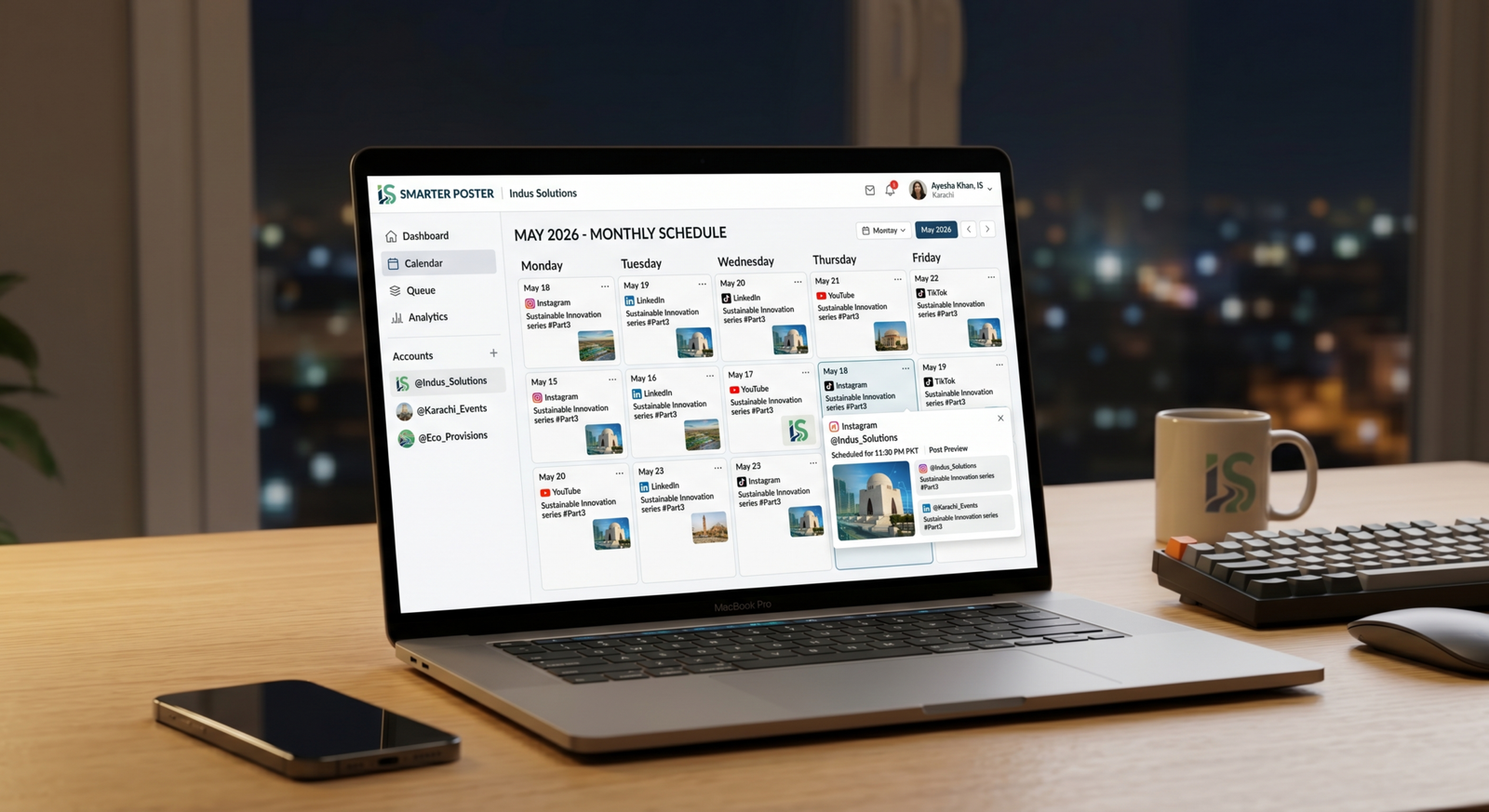
In 2026, successful social media marketing is not about posting randomly, it’s about strategic planning. A well-structured social media content calendar helps businesses stay consistent, organized, and conversion-focused across all platforms.
Whether you’re managing campaigns on Instagram, Facebook, TikTok, or LinkedIn, a content calendar is the foundation of every successful marketing strategy.
What is a Social Media Content Calendar?
A social media content calendar is a planned schedule of posts, campaigns, and content themes organized by date, platform, and objective.
It helps businesses:
- Stay consistent with posting
- Avoid last-minute content stress
- Align content with marketing goals
- Improve engagement and conversions
Internal Link: Learn overall strategy first:
Social Media Marketing for Businesses: Complete Growth Guide (2026)
Why a Content Calendar is Important in 2026
In today’s fast-moving digital world, businesses that fail to plan content often fail to perform.
Key Benefits:
- Better consistency across platforms
- Improved brand storytelling
- Higher engagement rates
- Stronger campaign performance
- Better ROI from ads and organic posts
For businesses in Pakistan and United Arab Emirates, where competition is increasing, structured content planning is essential for standing out.
Step-by-Step: How to Build a High-Converting Content Calendar
Step 1: Define Your Goals
Before planning content, ask:
- Do you want leads?
- Brand awareness?
- Sales or engagement?
Your goal will shape your entire calendar.
Step 2: Identify Content Pillars
Content pillars are main topics your brand will post about.
Examples:
- Educational content
- Product/service promotion
- Customer testimonials
- Industry trends
- Behind-the-scenes content
Internal Link: Improve strategy here:
Social Media Marketing Strategies for Startups & Small Businesses in 2026
Step 3: Choose Posting Frequency
Consistency matters more than volume.
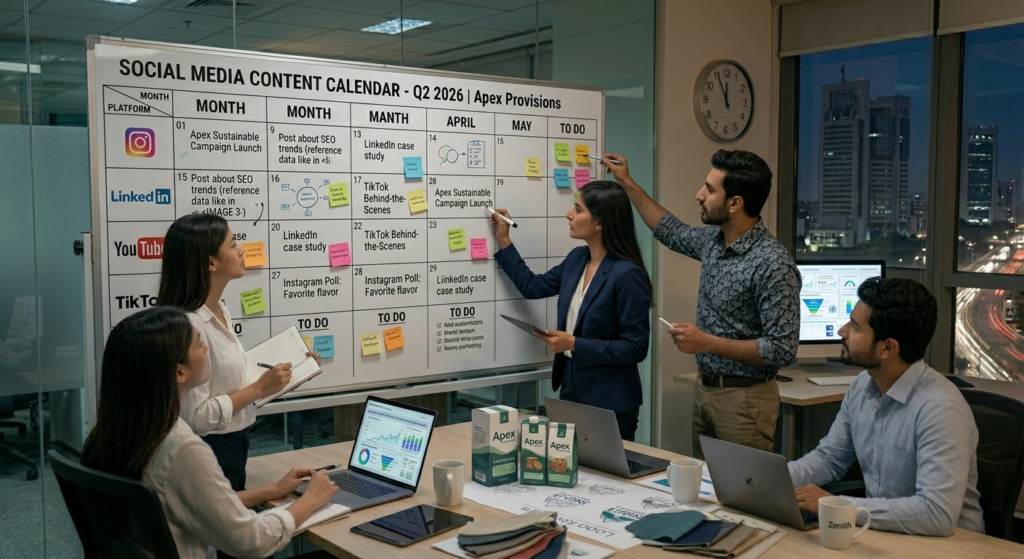
Recommended schedule:
- Instagram: 4–7 posts/week
- Facebook: 3–5 posts/week
- TikTok: 1–3 posts/day (short videos)
- LinkedIn: 3–5 posts/week
Step 4: Plan Content Types
A high-converting content calendar mixes different formats:
- Reels / Short videos
- Carousel posts
- Infographics
- Stories
- Live sessions
Internal Link: Improve visuals here:
Social Media Graphic Design Guide for Businesses (2026)
Step 5: Add Campaign Dates & Trends
Your calendar should include:
- Seasonal events
- Product launches
- Holidays
- Trending topics
Example:
- Ramadan campaigns (Pakistan & UAE markets)
- Black Friday promotions
- New Year offers
Internal Link: Explore trends:
7 Social Media Trends Pakistani Businesses Can’t Ignore in 2026
Step 6: Use Scheduling Tools
Top tools for 2026:
- Hootsuite – Scheduling & analytics
- Buffer – Simple content scheduling
- Meta Business Suite – Facebook & Instagram management
- Canva – Design + planning integration
External Link: https://buffer.com
External Link: https://hootsuite.com
What Makes a Content Calendar “Conversion-Focused”?
Many businesses create calendars, but few create converting calendars.
Key Elements:
- Clear call-to-action (CTA) in posts
- Mix of value + sales content
- Audience targeting per post
- Tracking engagement and conversions
- Strong storytelling structure
Example of a Weekly Content Calendar Structure
Monday: Educational post (tips or guide)
Tuesday: Product/service showcase
Wednesday: Customer testimonial
Thursday: Trend-based content
Friday: Behind-the-scenes
Weekend: Engagement post (polls, questions)
Common Mistakes to Avoid
- Posting without strategy
- Ignoring analytics
- Over-promoting services
- Not adapting to trends
- Inconsistent posting schedule
Internal Link: Avoid mistakes here:
Social Media Marketing Mistakes to Avoid in 2026

How Content Calendar Improves Conversions
A structured calendar directly impacts business results by:
- Increasing brand trust
- Improving audience retention
- Driving consistent traffic
- Supporting ad campaigns
- Converting followers into customers
Internal Link: Learn lead generation:
How Social Media Marketing Generates Real Leads
Final Thoughts
A social media content calendar is not just a scheduling tool, it is a growth system. Businesses that plan ahead consistently outperform those that post randomly.
In 2026, success belongs to brands that combine strategy, consistency, and data-driven content planning.
For businesses looking to scale faster, professional support can help build high-performing systems.
Internal Link: Explore services:
Social Media Marketing Services for Small Businesses
FAQs
What is a social media content calendar?
A social media content calendar is a schedule that organizes planned posts, campaigns, and content themes across different platforms.
Why is a content calendar important for businesses?
It helps businesses stay consistent, improve engagement, plan campaigns effectively, and increase conversions.
What tools can I use to create a content calendar?
Popular tools include Buffer, Hootsuite, Meta Business Suite, and Canva.
How often should I update my content calendar?
Most businesses should update their calendar monthly, while reviewing performance weekly for optimization.