Many businesses start their social media marketing by assigning it to an internal employee. Often, this responsibility goes to someone in marketing, customer service, or even the business owner.
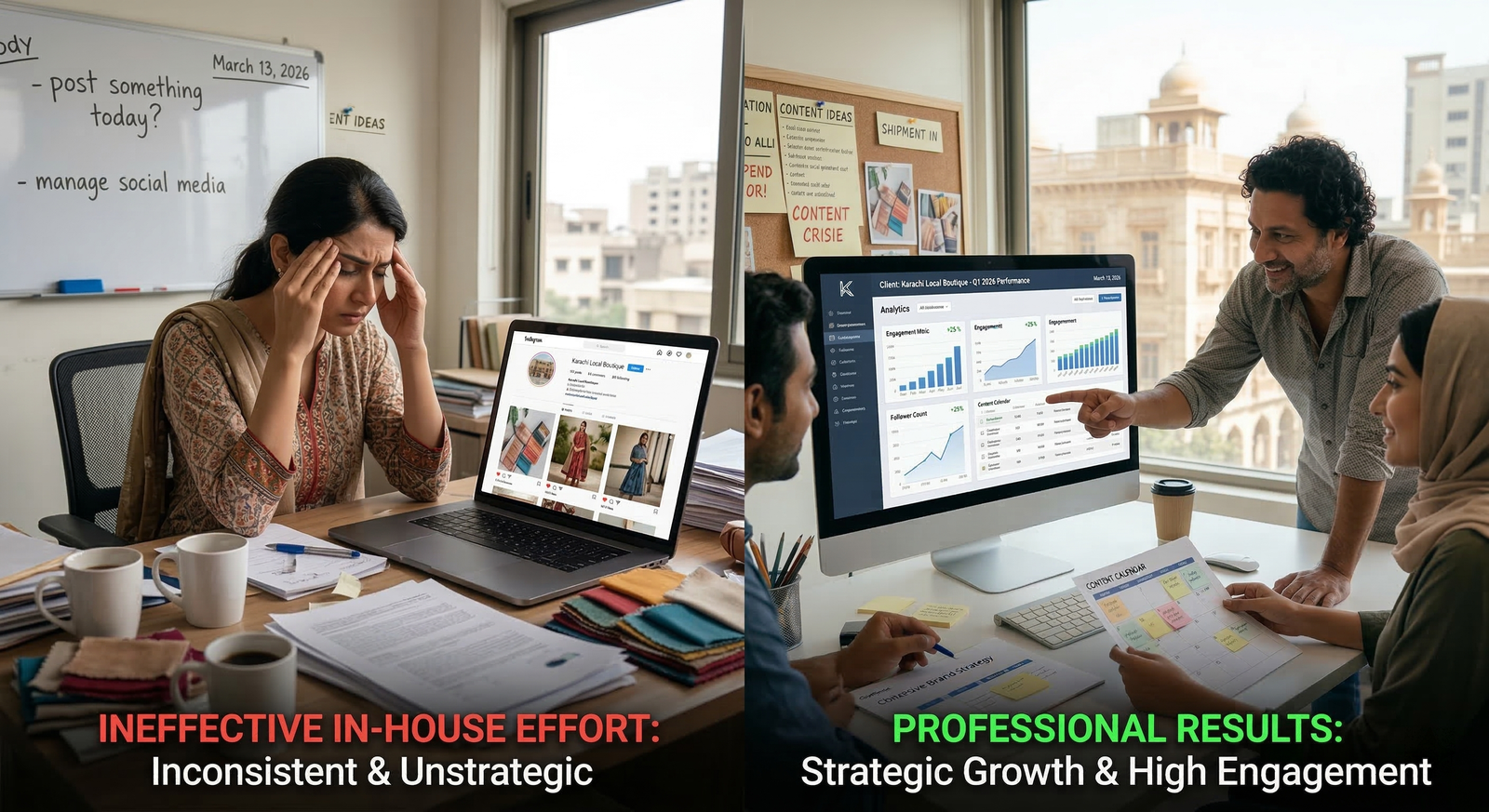
While managing social media internally may seem cost-effective, many companies quickly realize that their social media efforts produce little engagement, minimal leads, and inconsistent growth.
The reason is simple: social media marketing requires strategy, creativity, data analysis, and continuous optimization. Without the right expertise, in-house social media management often struggles to deliver results.
In this guide, we’ll explore why in-house social media fails for most businesses and how companies can improve their social media performance.
Lack of a Clear Social Media Strategy
One of the biggest reasons in-house social media fails is the absence of a well-defined strategy.
Many businesses simply post random content without clear goals such as:
- Increasing brand awareness
- Generating leads
- Driving website traffic
- Promoting products or services
Without a strategy, social media efforts become inconsistent and ineffective.
Businesses that want long-term results should follow structured approaches like those explained in Social Media Marketing Strategies for Startups & Small Businesses in 2026.
Limited Expertise and Skills
Professional social media marketing requires multiple skills, including:
- Content creation
- Graphic design
- Video editing
- Advertising strategy
- Analytics and reporting
Most internal teams do not have expertise in all these areas.
Successful social media marketing often requires specialists who understand platforms like Facebook, Instagram, and TikTok algorithms.
Businesses that lack these skills may struggle to grow their audience or generate leads.
You can also explore Social Media Graphic Design Guide for Businesses (2026) to understand how design affects engagement.
Inconsistent Posting and Content Planning
Consistency is critical in social media marketing.
However, when businesses manage social media internally, posting often becomes irregular because employees already have other responsibilities.
This leads to problems like:
- Long gaps between posts
- Poor content planning
- Low audience engagement
A structured posting schedule and content calendar are essential for growth.
For step-by-step planning, see Social Media Marketing Checklist for 2026 (Step-by-Step for Businesses).
Poor Content Quality
Content is the backbone of successful social media marketing.
Businesses that rely on in-house management often struggle with creating:
- High-quality graphics
- Professional videos
- Engaging captions
- Strategic storytelling
Low-quality content rarely performs well on modern platforms.
Short-form video content, especially on Instagram Reels and TikTok, has become one of the biggest drivers of engagement.
Businesses that invest in professional content creation often achieve much better results.
You may also read Professional Video Editing Services in 2026: Boost Your Brand With Engaging Content to understand how video content improves marketing performance.
Lack of Advertising Expertise
Organic social media reach has declined significantly in recent years. Most platforms now require paid advertising to reach larger audiences.
Running effective ads requires knowledge of tools like Meta Ads Manager, where businesses can target audiences based on location, interests, and behaviors.
Without proper ad strategy, businesses often:
- Waste advertising budgets
- Target the wrong audience
- Run ineffective campaigns
If you want to understand advertising strategies in detail, read Facebook & Meta Ads Guide for Small Businesses in Pakistan (2026).
You can also learn about advertising basics here:
https://www.facebook.com/business/ads-guide
No Data Analysis or Performance Tracking
Another common problem with in-house social media management is the lack of performance analysis.
Many businesses focus only on likes and followers rather than meaningful metrics such as:
- Engagement rate
- Lead generation
- Website traffic
- Conversion rates
Professional marketers use tools like Google Analytics and Meta Business Suite to track campaign performance and improve strategy.
For deeper insights into results-driven marketing, check How Social Media Marketing Generates Real Leads.
You can also explore social media analytics best practices here:
https://blog.hootsuite.com/social-media-metrics/
Time Constraints and Resource Limitations
Social media marketing requires daily effort, including:
- Content creation
- Comment replies
- Message responses
- Trend monitoring
- Campaign optimization
Most businesses simply do not have enough internal resources to handle these tasks consistently.
This often leads to inactive accounts or slow growth.
Businesses that want consistent performance often choose professional social media management services to handle their marketing activities effectively.
You can learn more in Social Media Marketing Services for Small Businesses.
Conclusion
While managing social media internally may seem convenient, many businesses struggle to achieve meaningful results due to lack of strategy, expertise, consistency, and resources.
Professional social media marketing requires a combination of creative content, strategic advertising, and performance analysis. Businesses that invest in professional social media management are more likely to achieve higher engagement, stronger brand visibility, and consistent lead generation.
In today’s competitive digital landscape, having the right social media strategy can make a significant difference in business growth.
FAQs
Why do many businesses struggle with in-house social media management?
Most businesses lack the time, expertise, and resources needed to create consistent content and manage effective social media strategies.
Is outsourcing social media marketing better than managing it internally?
Outsourcing often provides access to experienced professionals, better strategies, and improved marketing results.
What are common mistakes in in-house social media marketing?
Common mistakes include inconsistent posting, poor content quality, lack of advertising strategy, and not tracking performance metrics.
How can businesses improve their social media marketing results?
Businesses can improve results by developing a clear strategy, creating high-quality content, running targeted ads, and analyzing performance data.