Logo Design Process Explained
Many business owners believe logo design starts with opening design software and creating visual concepts. In reality, successful logo design begins long before any shapes, icons, or typography appear on a screen.
The best logos are the result of research, strategy, creativity, testing, and refinement. Whether you are launching a startup, rebranding an established company, or hiring a professional design agency, understanding the logo design process helps you make better decisions and achieve stronger branding results.
A well-designed logo becomes the foundation of your brand identity. It influences customer perception, builds recognition, communicates professionalism, and supports long-term business growth.
In this guide, we’ll explain every stage of the logo design process, show practical examples, highlight common mistakes, and help you understand what separates professional logo development from quick DIY solutions.
Why the Logo Design Process Matters
A logo is often the first thing potential customers notice about a business.
When businesses skip critical design stages, they often end up with logos that:
- Look generic
- Fail to communicate brand values
- Blend into competitors
- Become outdated quickly
- Require expensive redesigns later
A structured logo design process ensures every design decision supports business goals and brand positioning.
Related Reading:
Internal Link: Why a Professional Logo Is Critical for Brand Success
Overview of the Professional Logo Design Process
Professional logo design typically follows these stages:
| Stage | Purpose |
|---|---|
| Discovery | Understand business goals |
| Research | Analyze industry and audience |
| Strategy | Define brand direction |
| Concept Development | Generate creative ideas |
| Design Creation | Build logo concepts |
| Revisions | Refine designs |
| Testing | Ensure effectiveness |
| Final Delivery | Provide complete logo assets |
Each stage plays an important role in creating a logo that performs effectively across all branding materials.
Step 1: Discovery & Brand Research
Every successful logo begins with understanding the business behind it.
Designers typically gather information about:
- Company mission
- Products and services
- Target audience
- Industry
- Brand personality
- Long-term goals
Questions Often Asked During Discovery
- What does your business do?
- Who are your customers?
- What makes your company different?
- What emotions should your brand communicate?
This stage creates the strategic foundation for the entire project.
Related Reading:
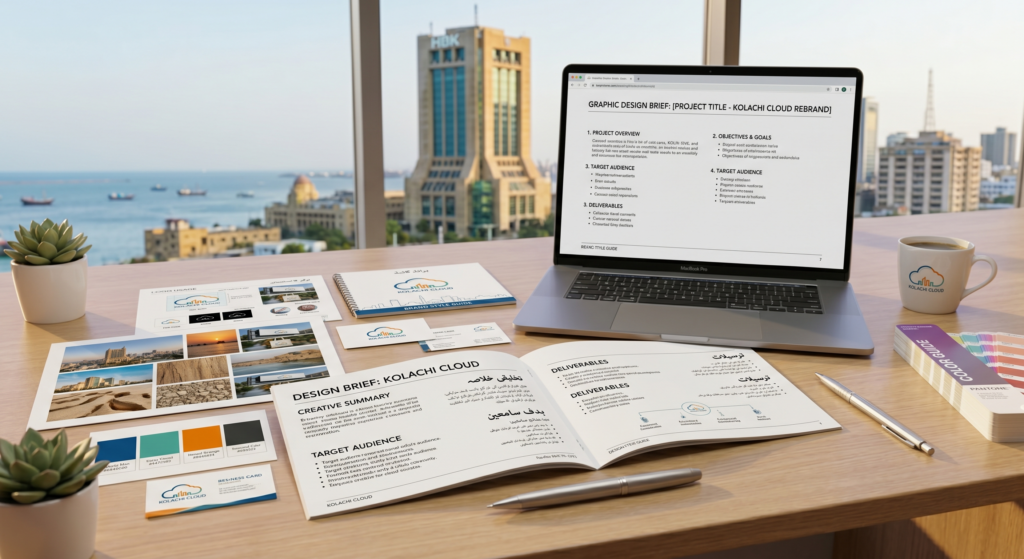
Internal Link: How to Write a Logo Design Brief (With Free Template for Businesses)
Step 2: Competitor Analysis
Before creating concepts, designers examine competitor logos.
The goal is not to copy competitors.
Instead, designers identify:
- Industry trends
- Overused symbols
- Color patterns
- Typography styles
- Opportunities for differentiation
Example
If every law firm uses scales of justice in their logo, a unique symbol may help a brand stand out more effectively.
Related Reading:
Internal Link: How to Choose the Best Logo for Your Business Industry in 2026
Step 3: Brand Strategy Development
A logo should support brand positioning.
At this stage, designers determine:
Brand Personality
Examples:
- Professional
- Innovative
- Friendly
- Luxury
- Minimalist
- Bold
Brand Message
The logo should visually communicate what the company represents.
For example:
| Brand Type | Logo Direction |
|---|---|
| Technology Startup | Modern and innovative |
| Luxury Brand | Elegant and refined |
| Construction Company | Strong and reliable |
| Children’s Brand | Fun and playful |
Step 4: Mood Boards & Inspiration
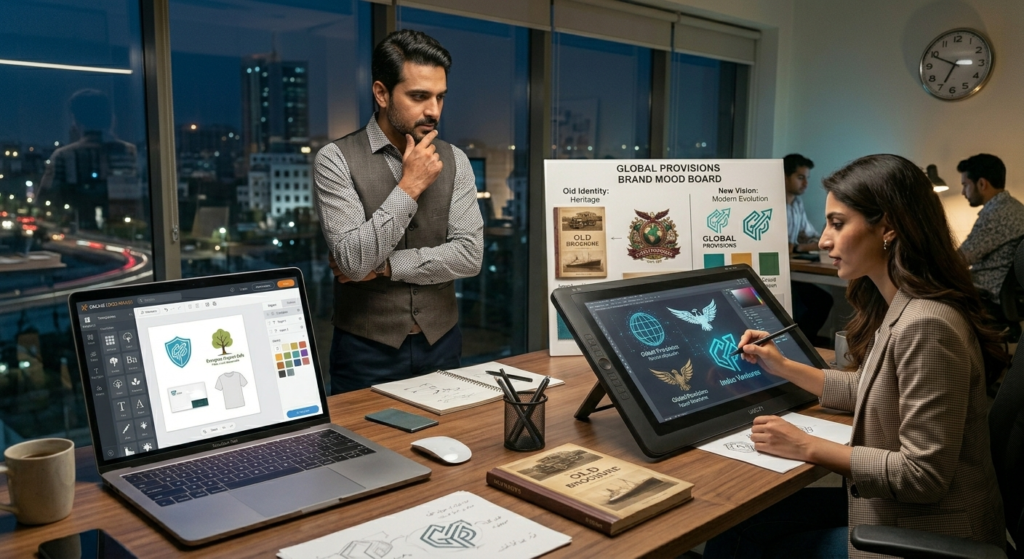
Mood boards help visualize design direction before creating concepts.
They may include:
- Typography examples
- Color palettes
- Logo styles
- Brand imagery
- Industry inspiration
Mood boards ensure alignment between clients and designers early in the project.
Step 5: Sketching Initial Concepts
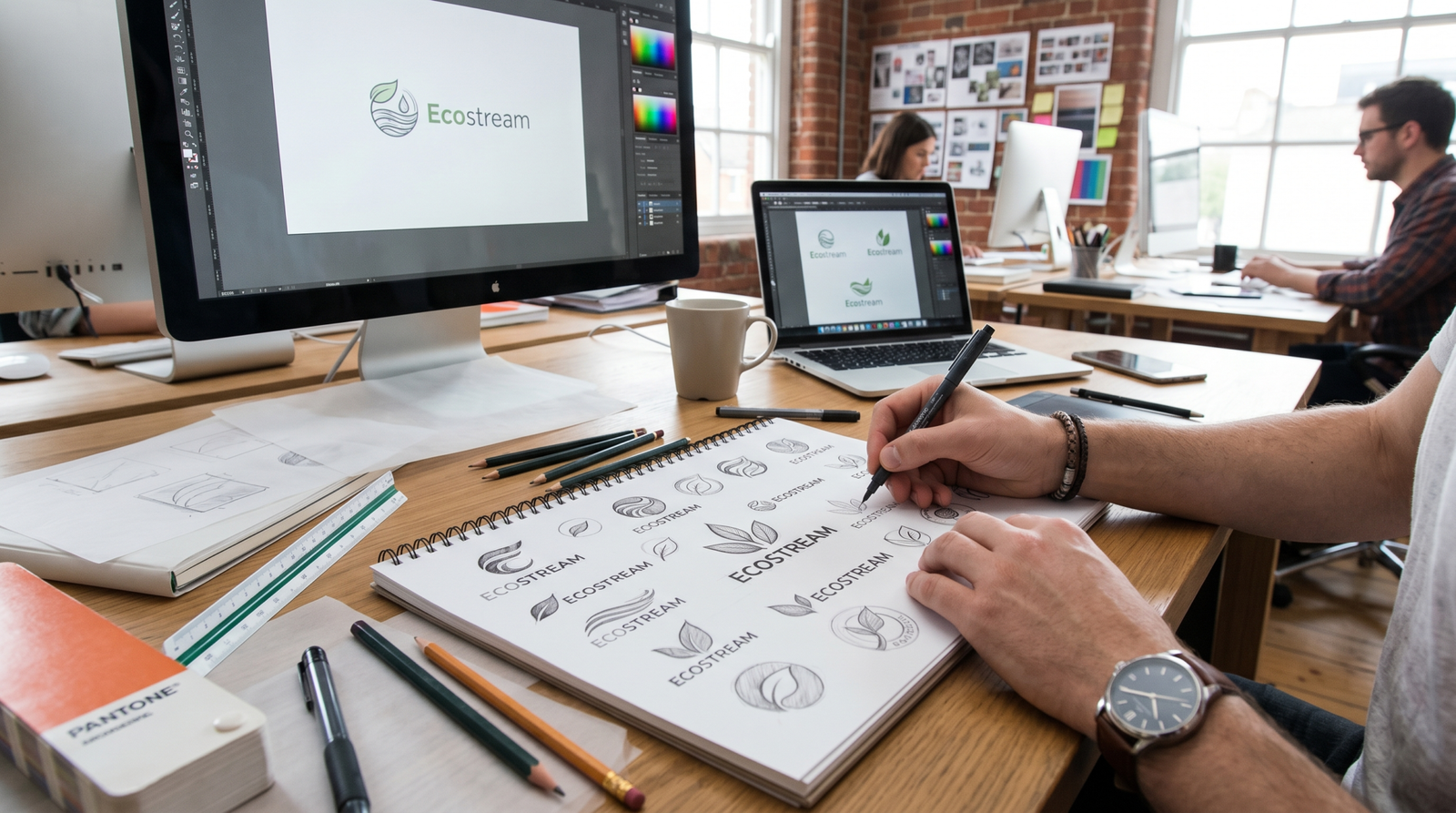
Professional designers often begin with pencil and paper.
Sketching allows rapid exploration of ideas without software limitations.
Benefits include:
- Faster creativity
- More concept variety
- Better problem-solving
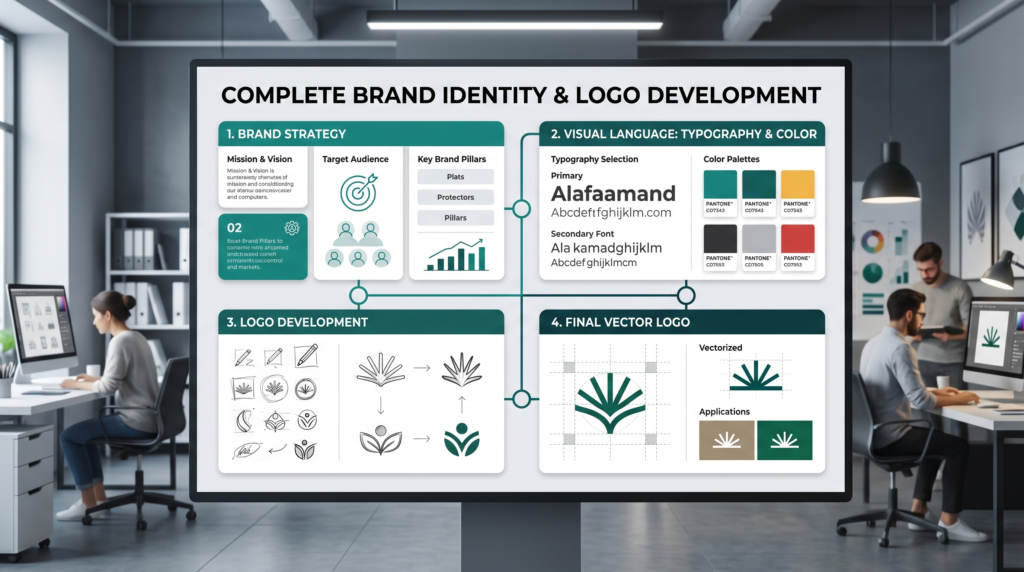
During this phase, dozens of rough ideas may be generated before selecting a few promising directions.
Step 6: Digital Logo Creation
Selected sketches are recreated digitally.
Designers use tools such as:
- Adobe Illustrator
- CorelDRAW
- Affinity Designer
At this stage, logos become more refined and professional.
Key Focus Areas
- Balance
- Proportion
- Simplicity
- Scalability
- Visual impact
Related Reading:
Internal Link: DIY Logo Design Tools vs Hiring a Professional Designer
Step 7: Typography Selection
Typography significantly influences brand perception.
Different font categories communicate different emotions.
| Font Style | Brand Impression |
|---|---|
| Serif | Traditional, trustworthy |
| Sans Serif | Modern, clean |
| Script | Elegant, creative |
| Display | Unique, expressive |
A carefully selected font improves recognition and professionalism.
Related Reading:
Internal Link: Typography in Logo Design: Fonts That Boost Brand Recognition
Step 8: Color Selection
Colors play a major role in branding psychology.
Examples:
| Color | Common Association |
|---|---|
| Blue | Trust and professionalism |
| Red | Energy and excitement |
| Green | Growth and sustainability |
| Black | Luxury and authority |
| Orange | Creativity and friendliness |
The best logos work in both color and black-and-white versions.
Related Reading:
Internal Link: Logo Color Psychology: Choosing the Right Colors for Your Brand
Step 9: Client Feedback & Revisions
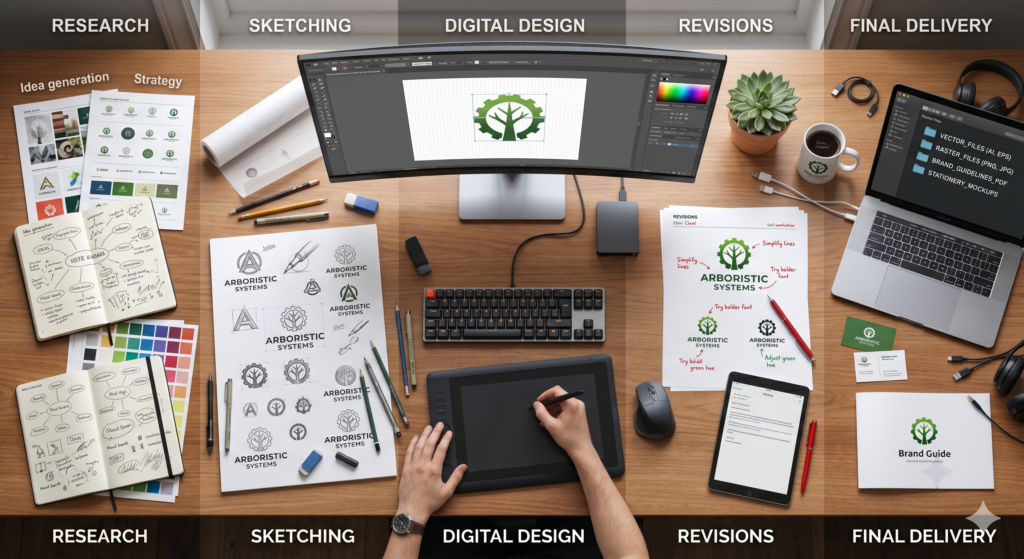
Once concepts are presented, feedback becomes essential.
Typical revision areas include:
- Colors
- Fonts
- Symbol refinement
- Layout adjustments
- Spacing improvements
Best Practice
Constructive feedback should focus on business objectives rather than personal preferences.
Example:
Good:
“Can we make the logo feel more premium?”
Less Helpful:
“I just don’t like blue.”
Step 10: Logo Testing
Before final approval, logos should be tested in real-world applications.
Testing Scenarios
- Website headers
- Social media profiles
- Business cards
- Product packaging
- Mobile devices
- Large signage
A logo must remain recognizable at all sizes.
Related Reading:
Internal Link: How a Professional Logo Impacts Brand Credibility
Step 11: Final Delivery
Once approved, designers prepare final assets.
Deliverables Often Include
- AI files
- EPS files
- SVG files
- PNG files
- JPG files
- Black version
- White version
- Color version
Brand Guidelines
Professional projects often include:
- Color codes
- Typography standards
- Logo spacing rules
- Usage guidelines
These assets ensure long-term brand consistency.
Practical Example
Imagine a startup software company called “CloudSync.”
Discovery
Brand values:
- Innovation
- Simplicity
- Reliability
Research
Competitors use:
- Clouds
- Abstract technology symbols
Concept Development
Designer creates:
- Minimal cloud icon
- Modern typography
- Blue and teal palette
Testing
Logo performs well across:
- Website
- Mobile app
- Social media
- Product dashboard
Result:
A scalable and memorable logo aligned with brand goals.
DIY vs Professional Logo Design Process
| Factor | DIY Process | Professional Process |
| Research | Minimal | Extensive |
| Strategy | Limited | Comprehensive |
| Creativity | Template-based | Original concepts |
| Scalability | Often overlooked | Thoroughly tested |
| Brand Alignment | Variable | Strategic |
| Long-Term Value | Lower | Higher |
Businesses seeking long-term growth often benefit from professional logo development.
Related Reading:
Internal Link: Custom Logo vs Template Logo: Which Is Better for Your Business?
Common Logo Design Mistakes
Skipping Research
Leads to generic designs.
Following Trends Blindly
Can make logos age quickly.
Using Too Many Colors
Creates visual clutter.
Poor Typography
Reduces professionalism.
Designing Only for Digital Use
Logos must work everywhere.
Overcomplicated Concepts
Simple logos are easier to remember.
Related Reading:
Internal Link: Top 10 Logo Design Mistakes That Kill Your Brand Credibility
How Long Does the Logo Design Process Take?
Project timelines vary.
| Project Type | Typical Timeline |
| DIY Logo | Few hours to days |
| Freelancer | 1–3 weeks |
| Professional Agency | 2–8 weeks |
| Enterprise Branding Project | Several months |
Related Reading:
Internal Link: How Long Does It Take to Design a Logo? Timeline Explained for Businesses
10 Actionable Tips for a Better Logo Design Process
1. Start with strategy, not visuals.
2. Understand your audience first.
3. Research competitors thoroughly.
4. Focus on simplicity.
5. Prioritize scalability.
6. Test logos in multiple formats.
7. Avoid trendy design shortcuts.
8. Use professional vector software.
9. Gather objective feedback.
Conclusion
A great logo doesn’t happen by accident. It emerges from a strategic process that combines research, creativity, testing, and refinement. Understanding the logo design process helps businesses make informed branding decisions and ensures the final logo supports long-term growth.
Whether you’re creating a new logo or redesigning an existing one, following a structured process dramatically increases the chances of building a memorable, scalable, and effective brand identity.
Call-To-Action
Ready to create a logo that truly represents your business?
Omocracy’s professional logo designers follow a proven design process that combines strategy, creativity, and branding expertise to deliver logos built for long-term success.
Contact Omocracy today and start building a stronger brand identity.
External Resources
- Adobe Logo Design Resources
https://www.adobe.com - HubSpot Branding Guide
https://www.hubspot.com - Shopify Logo Design Guide
https://www.shopify.com - Canva Design School
https://www.canva.com
Frequently Asked Questions
What is the logo design process?
The logo design process is the structured workflow used to create a professional logo from research through final delivery.
Why is research important in logo design?
Research helps ensure the logo aligns with audience expectations and industry positioning.
How many logo concepts should be created?
Most professional designers present 2–5 refined concepts.
What software is used for logo design?
Adobe Illustrator is the industry standard.
How many revisions are normal?
Most projects include 2–5 revision rounds.
Why should logos be tested?
Testing ensures the logo remains effective across various applications.
Should startups invest in professional logo design?
Yes. A strong logo helps establish credibility and recognition.
What file formats should be delivered?
AI, EPS, SVG, PNG, and JPG files are commonly provided.
Can AI generate professional logos?
AI can assist ideation but often lacks strategic brand thinking.
How long does a professional logo project take?
Typically between one and eight weeks depending on complexity.