Rebranding Case Studies
Rebranding is one of the most powerful moves a business can make. A well-executed logo redesign can completely transform how customers perceive a brand, boosting trust, recognition, and growth.
From global companies to startups, many businesses have successfully reinvented themselves through strategic logo changes. But rebranding is not just about design it is about aligning your identity with your vision, audience, and market position.
In this blog, we’ll explore real rebranding case studies, what made them successful, and how your business can benefit from a logo transformation in 2026.
What Is Rebranding?
Rebranding is the process of changing a company’s visual identity, messaging, or overall brand perception.
It often includes:
- Logo redesign
- Color palette updates
- Typography changes
- Brand messaging adjustments
If you’re planning a redesign, read:
Logo Redesign Guide: When & How to Update Your Logo in 2026
Why Businesses Rebrand
Companies rebrand for several reasons:
- Outdated design
- Change in target audience
- Expansion into new markets
- Negative brand perception
- Mergers or acquisitions
Learn when it’s necessary:
Signs Your Business Needs a New Logo
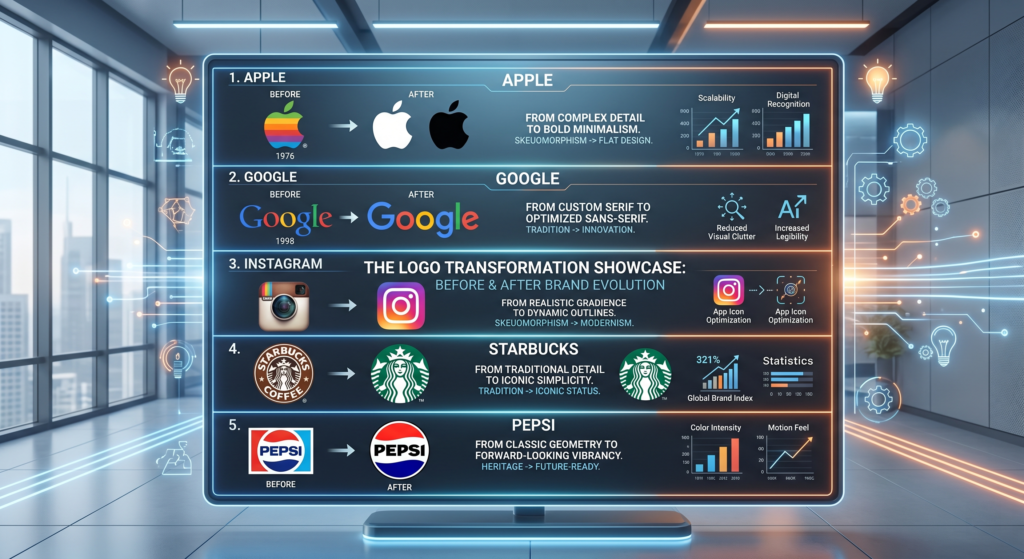
Case Study 1: Apple – From Complex to Minimal
Before
Early Apple logos were highly detailed, featuring illustrations and complex elements.
After
Apple transitioned to a clean, minimalist logo that is now globally recognized.
Why It Worked
- Simplicity improved recognition
- Scalable across all devices
- Matched modern tech branding
Understand this shift better:
Minimalist vs Detailed Logos: Which Works Best for Your Business?
Case Study 2: Airbnb – Building Emotional Connection
Before
Airbnb’s old logo lacked emotional appeal and uniqueness.
After
The new “Bélo” symbol created a sense of belonging and community.
Why It Worked
- Strong storytelling
- Unique brand identity
- Emotional connection with users
Learn how design impacts perception:
How to Make a Logo That Converts: Design Psychology Tips
Case Study 3: Pepsi – Evolution Through Decades
Before
Pepsi has gone through multiple logo changes over the years.
After
Its modern logo is cleaner, more dynamic, and digitally optimized.
Why It Worked
- Continuous adaptation to trends
- Strong brand consistency
- Improved digital presence
Explore modern trends:
Logo Design Trends That Make Brands Stand Out in 2026
Case Study 4: Instagram – Bold Modern Transformation
Before
Instagram had a detailed, realistic camera logo.
After
It switched to a vibrant, minimalist gradient icon.
Why It Worked
- Better mobile visibility
- Modern aesthetic
- Strong brand recall
Learn about color impact:
Logo Color Psychology: Choosing the Right Colors for Your Brand
Case Study 5: Mastercard – Simplifying for Digital Era
Before
Mastercard used text-heavy logos with outlines.
After
It simplified to overlapping circles with minimal text.
Why It Worked
- Clean and modern
- Easy global recognition
- Strong digital adaptability
Key Lessons from Successful Rebranding
1. Simplicity Wins
Most successful brands moved toward minimalism.
2. Align with Audience
Rebranding should reflect customer expectations and behavior.
3. Focus on Scalability
Your logo must work across digital platforms.
4. Maintain Brand Identity
Don’t lose your core identity during redesign.
Learn fundamentals here:
What Makes a Good Logo? Design Principles Explained for Businesses
Common Rebranding Mistakes
- Changing too much too quickly
- Ignoring customer perception
- Following trends blindly
- Lack of strategy
Avoid these mistakes:
Top 10 Logo Design Mistakes That Kill Your Brand Credibility
When Should Your Business Rebrand?
You should consider rebranding if:
- Your logo looks outdated
- Your business has evolved
- You’re targeting a new audience
- Your brand lacks recognition
Read more:
When Should You Redesign Your Business Logo?
Why Professional Rebranding Matters
Rebranding is a strategic process, not just design.
A professional approach ensures:
- Market research
- Unique design
- Strong positioning
- Long-term brand growth
If you’re planning a transformation, explore our Logo Design Services Page
You can also understand value here:
Logo Design for Businesses: Is It Worth the Cost?
External References
Learn more about rebranding and logo evolution:
- https://www.interaction-design.org/literature/topics/branding
- https://99designs.com/blog/logo-branding/rebranding/
- https://www.smashingmagazine.com/category/branding/
- https://www.adobe.com/creativecloud/design/discover/branding.html
- https://www.canva.com/learn/rebranding/
Conclusion
Rebranding is not just about changing a logo, it’s about transforming how your business is perceived.
The most successful brands evolve with time while staying true to their identity. Whether you choose a complete redesign or a subtle refresh, the goal is to create a logo that connects with your audience and supports your growth.
In 2026, businesses that adapt and refine their branding will always stay ahead.
FAQs
What is rebranding in logo design?
Rebranding is the process of updating a company’s logo and visual identity to better reflect its goals, audience, and market position.
How often should a business rebrand?
There is no fixed timeline. Most businesses rebrand when their design becomes outdated or their strategy changes.
Is rebranding expensive?
It depends on the scope. You can learn more here:
Logo Design Cost in Pakistan & UAE (2026 Pricing Guide)
Can rebranding improve business growth?
Yes. A successful rebrand can increase recognition, trust, and customer engagement.