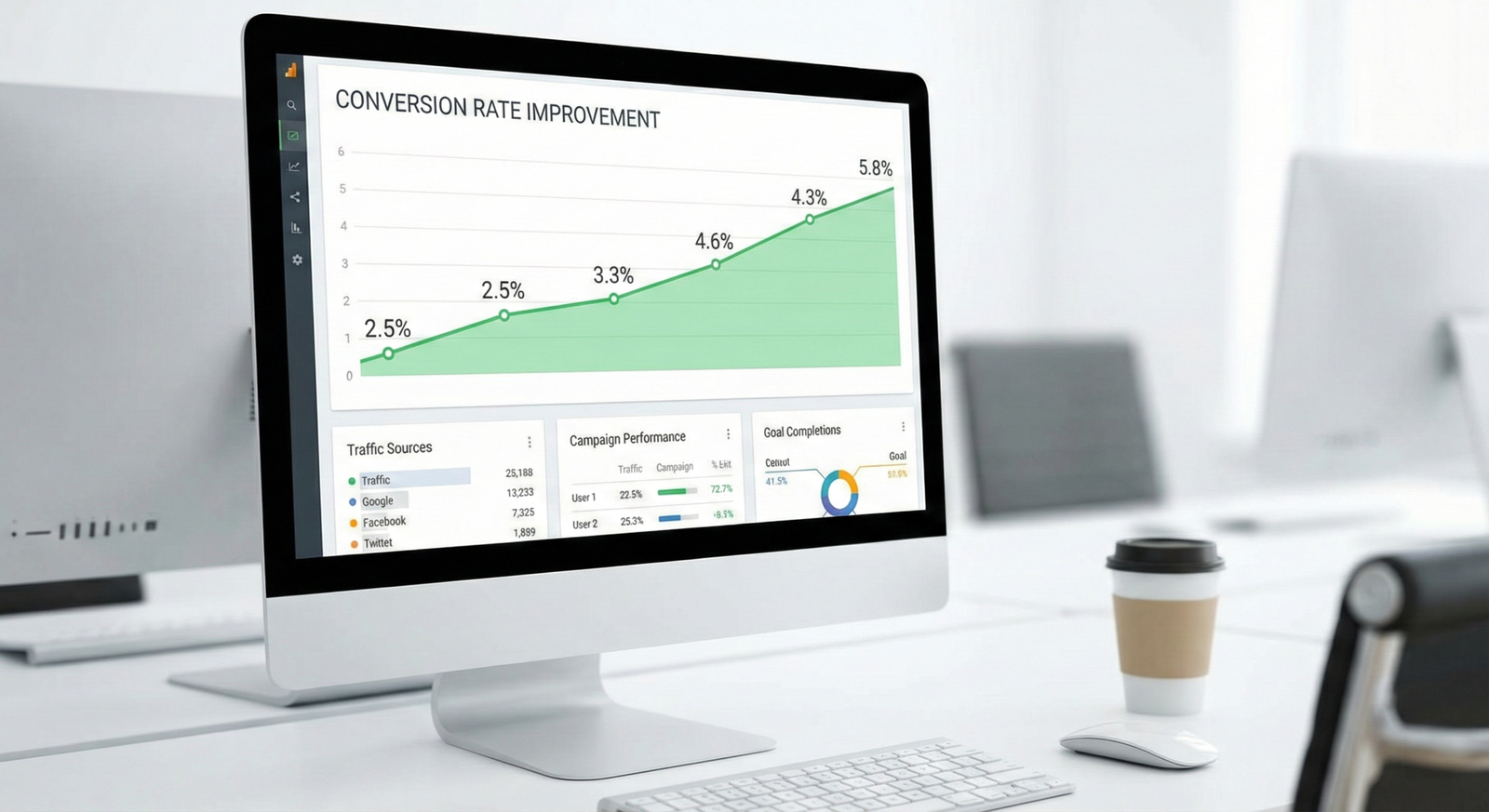
Why Most Business Websites Don’t Convert? Many businesses invest in website design and development but still struggle to generate leads or sales. If your business website is not converting, the problem is usually not traffic — it’s user experience, trust signals, or conversion strategy.
Before fixing conversion issues, you must first ensure your website has a strong foundation. If you’re unsure about website fundamentals, read How Professional Website Development Helps Your Business Grow.
Research shows user experience directly affects conversion rates and customer retention.
External Reference: https://www.nngroup.com/articles/definition-user-experience/
Poor First Impression
Visitors decide whether to stay on your website within seconds. Poor design, outdated layout, or slow loading can instantly reduce trust.
If your design looks outdated, it may be causing issues explained in First Impression Matters: Website Design for Businesses (2026).
Google confirms page experience and usability affect search rankings and user behavior.
External Reference: https://developers.google.com/search/docs/fundamentals/page-experience
Fix
- Use modern UI design
- Improve visual hierarchy
- Use professional branding
Slow Website Speed
A slow website is one of the biggest conversion killers. Users leave if pages take too long to load.
If you suspect speed problems, review Common Website Design Mistakes That Hurt SEO in 2026.
Studies show faster websites improve engagement and conversion rates.
External Reference: https://web.dev/performance
Fix
- Optimize images
- Improve hosting quality
- Remove heavy plugins
Poor Mobile Optimization
Most business traffic now comes from mobile devices. If your website is not mobile-friendly, conversions drop.
If you are choosing platform or redesigning, compare options in Custom Website vs WordPress: Which One Should You Choose?
Google uses mobile-first indexing, meaning mobile performance impacts rankings.
External Reference: https://developers.google.com/search/mobile-sites
Fix
- Use responsive design
- Test on real mobile devices
- Improve mobile speed
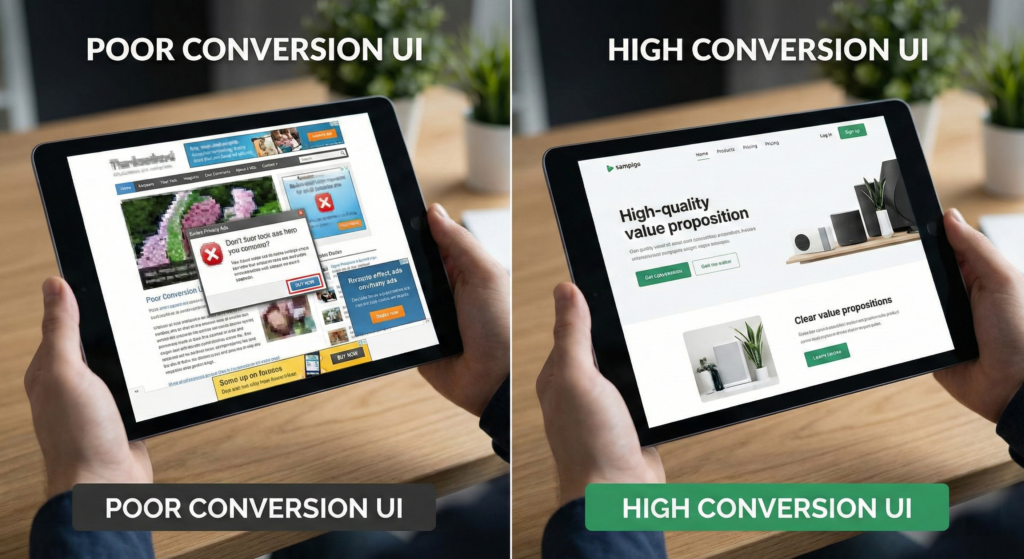
Weak Call-To-Action (CTA)
If visitors don’t know what to do next, they won’t convert.
Your CTA should be clear:
✔ Get Quote
✔ Book Consultation
✔ Contact Now
Conversion-focused design is a key part of SEO-Friendly Website Design: Best Practices for Higher Rankings.
Lack of Trust Signals
Users need proof before buying or contacting.
Missing Trust Elements:
- Testimonials
- Case studies
- Reviews
- Security badges
- Business certifications
Trust signals increase conversion rates and customer confidence.
External Reference: https://www.shopify.com/blog/trust-badges
Wrong Target Audience Traffic
Sometimes the website is fine — but traffic is wrong.
If SEO is bringing irrelevant visitors, conversions stay low. That’s why development and SEO must work together, as explained in Why a Website Is Better Than Social Media Alone for Businesses (2026).
Complicated Navigation
If users can’t find information quickly, they leave.
Fix
- Simple menu structure
- Clear service pages
- Logical page flow
Good UX improves engagement and conversion potential.
External Reference: https://www.nngroup.com/articles/navigation-design/
Final Thoughts
Most business websites fail to convert not because they look bad — but because they lack strategy. Fixing design, speed, trust signals, and user experience can dramatically improve results.
If your website is not generating leads, it may be time for a professional audit or redesign. Explore our Website Development Services: https://omocracy.com/service/website-development/
FAQs
Why is my business website getting traffic but no leads?
Usually because of weak CTAs, poor user experience, or wrong audience targeting.
How do I improve website conversion rate?
Improve speed, design, trust signals, and mobile experience.
Does website design affect sales?
Yes. Poor design reduces trust and increases bounce rate.
How often should I redesign my website?
Most businesses update every 2–3 years.