
What Is Branding? Branding is the process of creating a unique identity for a business, product, or individual in the minds of customers. It defines how people perceive, trust, and remember a business.
In 2026, branding is essential. With intense competition and short attention spans, strong branding helps businesses stand out, build credibility, and grow faster.
Branding Definition (Simple Explanation)
Branding is the combination of visual identity, messaging, values, and customer experience that shapes public perception.
In simple words, branding is not what a business says about itself — it is what customers believe about it.
Why Branding Is Important in 2026
Branding directly impacts trust, recognition, and long-term success.
Strong branding helps businesses:
- Build credibility and trust
- Stay memorable
- Attract loyal customers
- Increase perceived value
- Support higher pricing
Internal link:
How Strong Branding Increases Trust and Sales in 2026
What Branding Is NOT (Common Misconceptions)
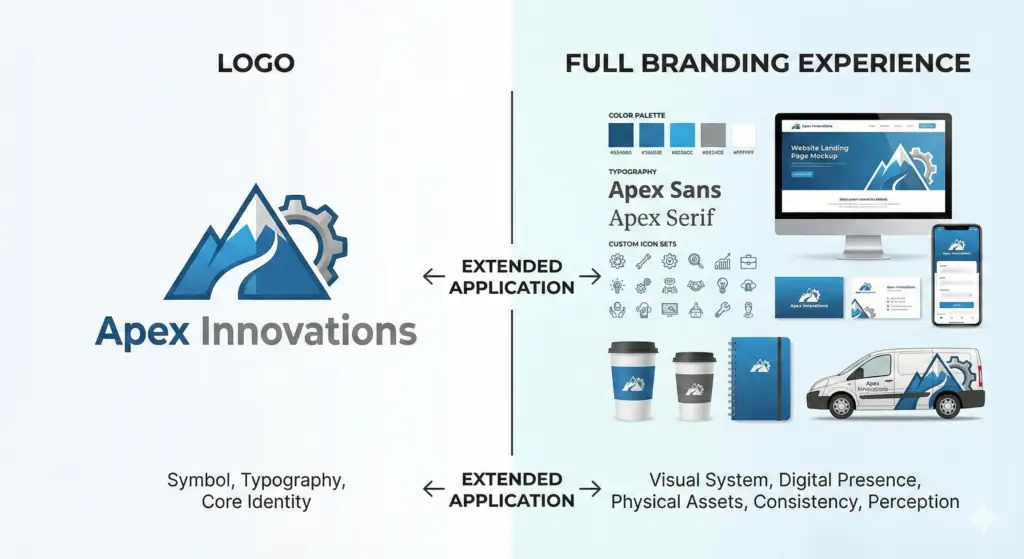
Many businesses confuse branding with design only.
❌ Branding is not just a logo.
❌ Branding is not only colors or fonts.
❌ Branding is not marketing alone.
Internal link:
Why Branding Is More Than a Logo in 2026
Core Elements of Branding
Effective branding is built from several connected elements.
Brand identity
This includes logos, colors, typography, and visual consistency.
Internal link:
What Is Brand Identity? Complete Guide for Businesses (2026)
Brand voice and messaging
The tone, language, and personality used in communication.
Brand values and purpose
What the brand stands for and why it exists.
Brand experience
How customers feel at every interaction point such as website, ads, and support.
Branding Examples (Real-World Brands)
Apple focuses on simplicity, innovation, and premium experience.
Nike represents motivation, empowerment, and performance.
Coca-Cola builds emotional connections and happiness.
Tesla highlights innovation, sustainability, and the future.
These brands sell more than products — they sell emotions and beliefs.
External link:
Investopedia branding overview
Branding vs Brand Identity (Quick Difference)
| Branding | Brand Identity |
|---|---|
| Overall perception | Visual elements |
| Emotional connection | Design assets |
| Long-term strategy | Tactical execution |
Internal link:
Brand Identity vs Brand Image: Key Differences Explained
How Branding Helps Small Businesses and Startups
Branding allows smaller businesses to compete with larger companies by building trust, professionalism, and recognition.
A strong brand helps attract loyal customers and grow faster.
Branding and Customer Trust
Trust is one of the most important factors in modern buying decisions, and branding plays a direct role in building it. When a brand looks consistent, communicates clearly, and delivers the same experience across all platforms, customers feel safer choosing it. A weak or inconsistent brand often raises doubts, even if the product or service is good.
In 2026, customers research brands before purchasing. They check websites, social media, reviews, and messaging. Strong branding ensures that no matter where customers interact with a business, they receive the same impression. This consistency builds confidence and increases the chances of conversion.
Branding as a Long-Term Business Asset
Branding is not a one-time task; it is a long-term investment that grows in value over time. While ads stop working once the budget ends, branding continues to deliver results by keeping a business memorable and recognizable. A well-established brand reduces marketing costs because customers already know and trust it.
Strong brands also adapt better to market changes. When businesses introduce new products or services, an existing brand identity makes adoption easier. Customers are more willing to try something new from a brand they already trust, which gives branded businesses a major competitive advantage.
Do You Need Professional Branding?
If your business struggles with low trust, weak recognition, inconsistent visuals, or poor customer loyalty, a professional branding strategy can make a major difference.
Internal link:
Branding Services Page
Frequently Asked Questions
What is branding in marketing?
Branding in marketing is how a business positions itself through messaging, visuals, and customer experience to influence perception and loyalty.
Why is branding important for businesses?
Branding builds trust, recognition, and emotional connection, which leads to higher customer retention and sales.
What are the main elements of branding?
Branding includes brand identity, voice, values, messaging, and customer experience.
Is branding only for big companies?
No. Branding is equally important for small businesses, startups, and personal brands.